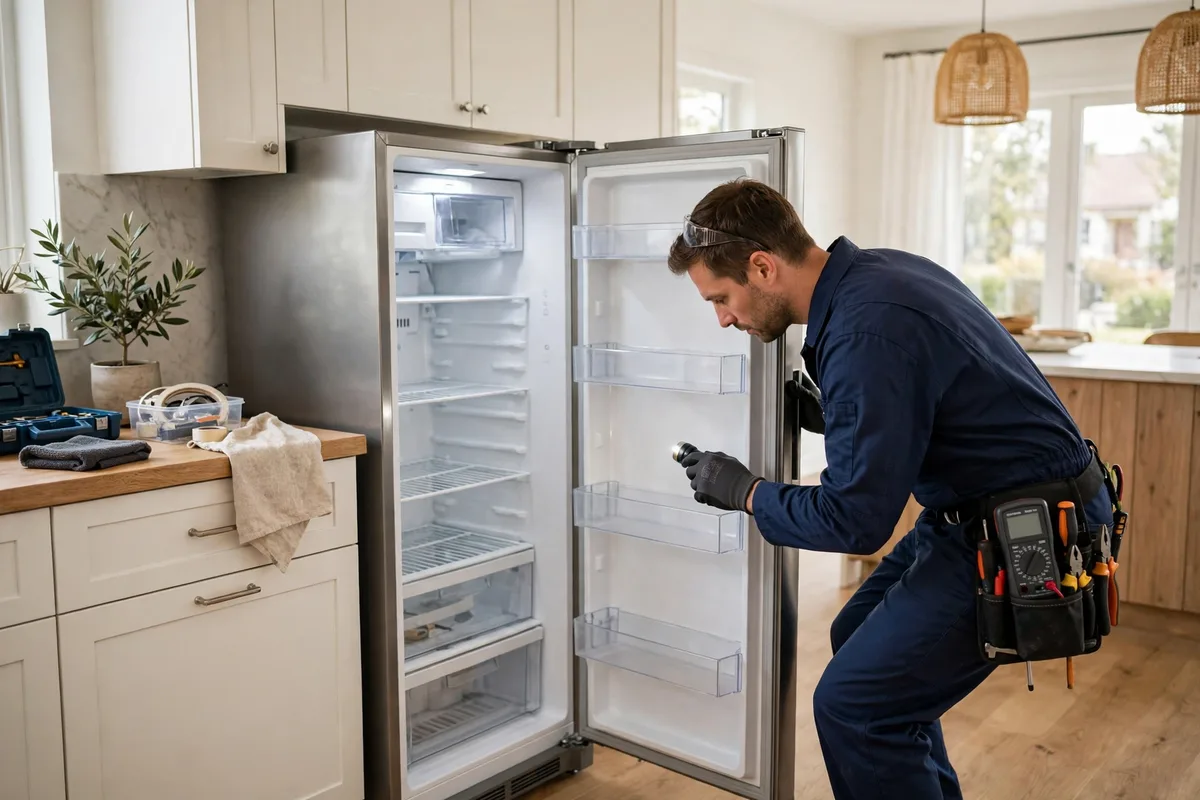
Freezer Repair Services in California
Is your freezer not freezing, leaking or building up excessive frost? Explore common freezer problems, possible causes and repair options.
Learn more →A refrigerator that stops cooling, leaks water, or makes unusual sounds can disrupt daily routines and put stored food at risk. Many of these problems have common, identifiable causes, from a worn door seal to a blocked vent or a failing fan. This page explains the symptoms repair professionals look for, the types of refrigerators covered, and how to decide when to request assistance.
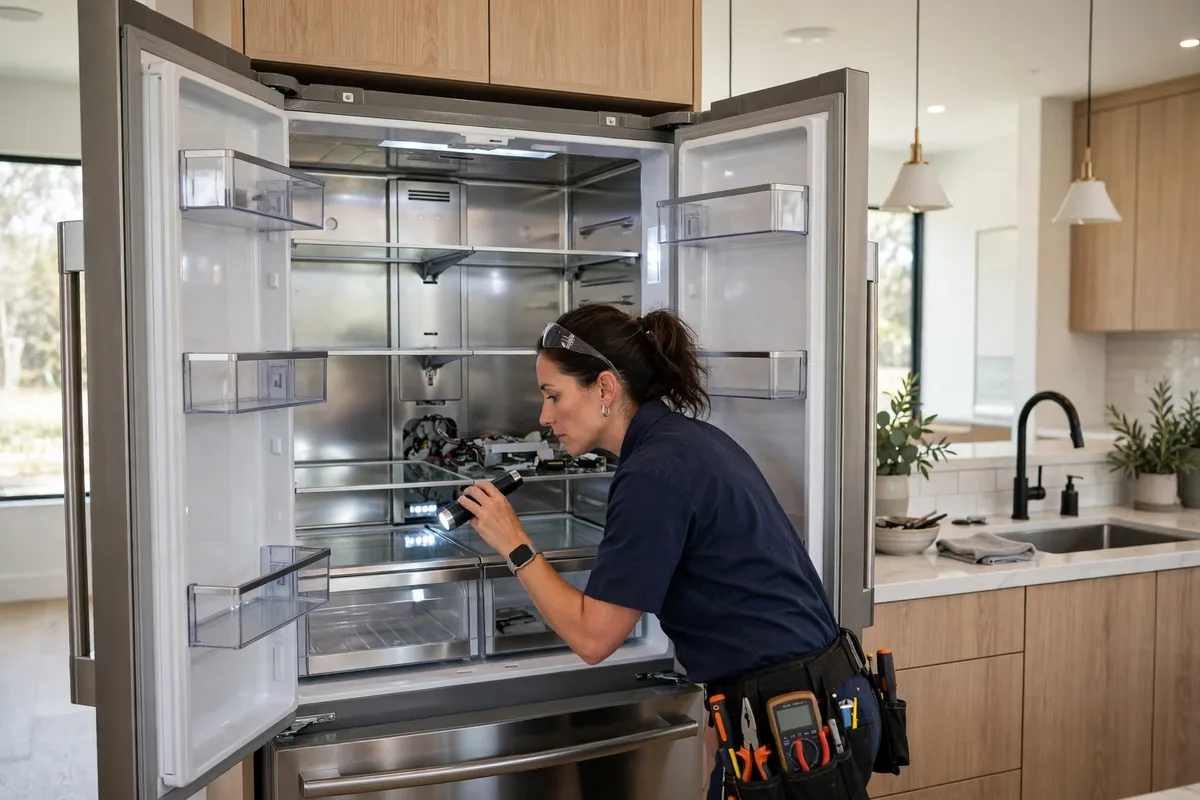
Refrigerators can develop cooling, water, noise, and ice-making problems over time. A unit that runs constantly, cycles on and off too often, or leaves food warmer than expected may have an airflow, thermostat, or sealed-system issue. Water on the floor, ice building up in the freezer, or a dispenser that stops working can point to a blocked drain, a supply-line fault, or a worn component. Noting when a symptom started, whether it affects the fresh-food section, the freezer, or both, and whether any recent change preceded it helps a repair professional narrow down the cause during a visit.
Repair help covers the main household refrigerator configurations found in California homes. Each layout has its own airflow pattern and component placement, so the diagnostic approach varies by type. French-door models, side-by-side models, top-freezer and bottom-freezer models, and built-in units are all covered, along with common counter-depth designs.
French-door and side-by-side refrigerators place the freezer and fresh-food sections beside or below one another, with separate doors and often an ice and water dispenser in the door. Problems in these models often involve the dispenser, the ice maker, or airflow between compartments. A repair professional checks the door seals, the dispenser assembly, and the fans that move cold air between sections.
Top-freezer and bottom-freezer models use a single column of cold air shared between compartments, while built-in models are fitted into cabinetry with front ventilation. In these designs, a blocked vent, a frosted evaporator, or a faulty damper can affect temperatures in one or both sections. Built-in units may also need attention to ventilation clearances so warm air can escape properly.
When a refrigerator is not cooling, the first things to check are simple: the temperature controls, whether the doors close fully, and whether vents inside are blocked by food or containers. If those look normal, the cause may be frost blocking the evaporator coils, a fan that has stopped moving air, a faulty thermostat or temperature sensor, or a problem with the compressor or sealed system. A repair professional can test the fans, listen for compressor operation, inspect the coils, and measure temperatures in both compartments before deciding on a repair.
Water inside or under a refrigerator often comes from a blocked or frozen defrost drain, a cracked drain pan, a loose water-supply connection, or a damaged water filter housing. Ice buildup in the freezer can follow from a door left ajar, a torn gasket, or a defrost system that is not clearing frost from the evaporator coils. A repair professional traces the water path, clears the drain, and checks the supply line and fittings for leaks.
Unusual noises can come from the compressor, a condenser or evaporator fan, or ice moving through the dispenser. A rattling sound may be as simple as the unit not sitting level, while a loud buzzing or grinding sound can indicate a fan blade striking frost or a motor that needs attention. Food freezing in the fresh-food section often points to a temperature control set too low, a faulty damper letting too much cold air through, or a sensor reading incorrectly. A water dispenser that runs slowly may have a clogged filter, low water pressure, or a faulty inlet valve.
The compressor and fans work together to circulate refrigerant and move cold air. If the compressor runs constantly without cooling, cycles very briefly, or makes a loud clicking sound, a repair professional can test the start components and check for overheating. Fan problems often show up as a loss of cooling in one section, or as a noise that changes when a door is opened.
Door seals keep warm, humid air out of the refrigerator. A seal that is torn, loose, or not sitting flat can let in moisture that becomes frost, and can make the unit run longer than it should. During a diagnostic visit, a repair professional typically checks the controls and sensors, inspects the seals and vents, examines the evaporator and condenser, and tests the fans, compressor, and defrost system in sequence. This step-by-step approach helps identify whether the fault is a single part or a combination of issues.
Request assistance when the refrigerator is not cooling at all, when water is leaking onto the floor, when there is a burning smell, or when a noise has become loud or persistent. Electrical and sealed-system work should be left to a qualified repair professional. Repair help covers major household brands commonly found in California homes, including Samsung, LG, Whirlpool, GE, Frigidaire, Bosch, KitchenAid, Maytag, and Kenmore, among others. Coverage includes San Jose, Sunnyvale, Mountain View, Sacramento, and West Sacramento, with surrounding communities in California.
Repair professionals may work on major appliance brands including Samsung, LG, Whirlpool, GE, Maytag, Frigidaire, KitchenAid, Bosch, Kenmore, and others. Brand and model support varies by location — see the full brand list.
Information and service connections are available in San Jose, Sunnyvale, Mountain View, Sacramento, and West Sacramento. Check the city page for your area to confirm ZIP-code coverage.
This often means cold air is not reaching the fresh-food section. Possible causes include a blocked vent, a faulty damper, a failed evaporator fan, or frost blocking airflow. A repair professional can check the fan, the damper, and the evaporator coils to find the cause.
Common causes are a blocked defrost drain, a cracked drain pan, or a loose water-supply line. If the water appears after the ice maker or dispenser is used, the supply connection or filter housing may need attention. Turn off the water supply if leaking continues and request assistance.
A humming sound can come from the compressor or a fan motor. A buzzing sound that changes when a door opens often points to a fan. If the noise is new, loud, or constant, a repair professional can inspect the fans and compressor.
Possible causes include a frozen fill tube, a faulty water inlet valve, a clogged filter, low water pressure, or a failed ice-maker assembly. Checking the water supply and filter is a useful first step before requesting a diagnostic visit.
Look for tears, warping, or gaps where the seal meets the cabinet. A simple check is to close the door on a thin piece of paper: if it slides out easily in several places, the seal may not be holding. A loose seal can cause frost buildup and higher running time.
That depends on the age of the unit, the cost of the part involved, and how well it has been working otherwise. A repair professional can explain the fault and the repair options so you can decide whether repair or replacement makes more sense for your situation.
Is your freezer not freezing, leaking or building up excessive frost? Explore common freezer problems, possible causes and repair options.
Learn more →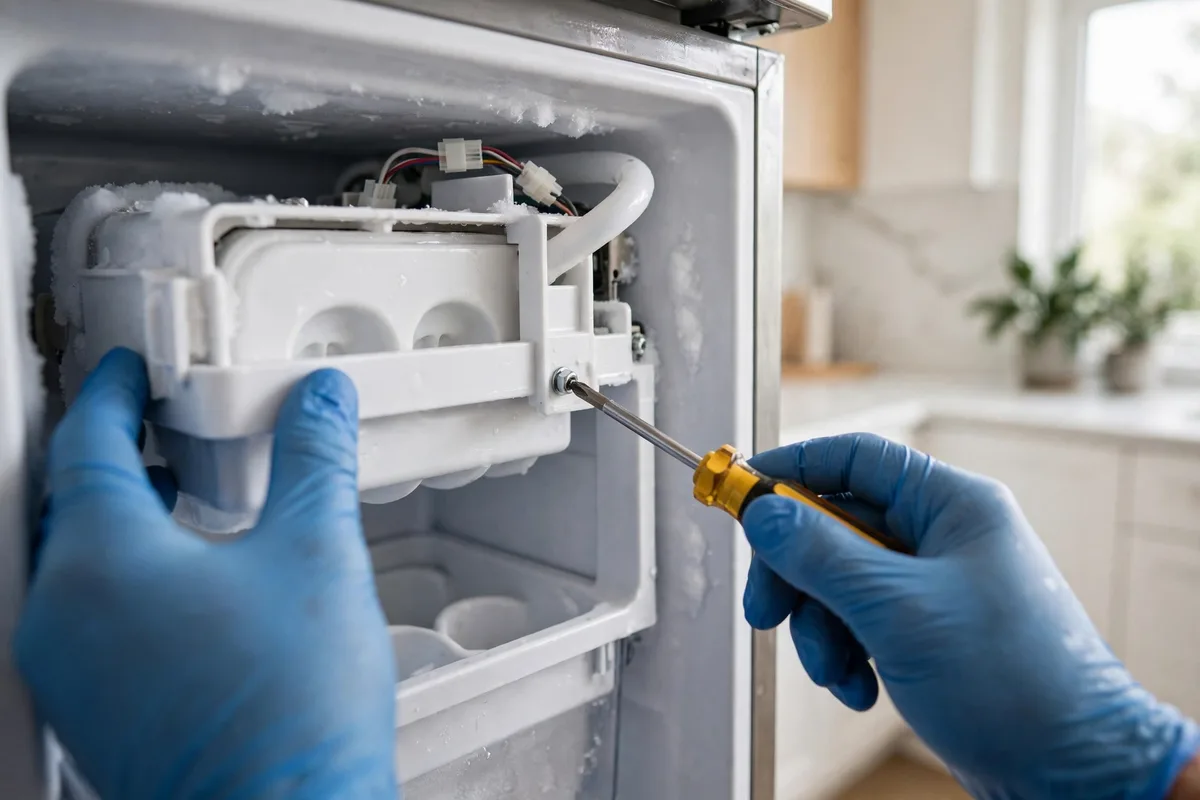
Is your ice maker not producing ice or leaking water? Explore common ice-maker problems and available repair help.
Learn more →
Looking for appliance repair in San Jose, CA? Explore refrigerator, washer, dryer, dishwasher and oven repair options, local coverage and co
Learn more →
Need appliance repair in Sacramento, CA? Explore home appliance repair services, common problems, supported brands and local ZIP-code covera
Learn more →Find answers about appliance repair options, service coverage, brands, common appliance faults and service requests.
Learn more →Find out why a refrigerator stops cooling, which simple checks are safe to try, and when to request help from a qualified repair professiona
Learn more →Learn where refrigerator leaks come from, how to find the source safely, and when a leak needs a qualified repair professional.
Learn more →Explore the relevant appliance service or check whether your ZIP code is included in current service coverage.