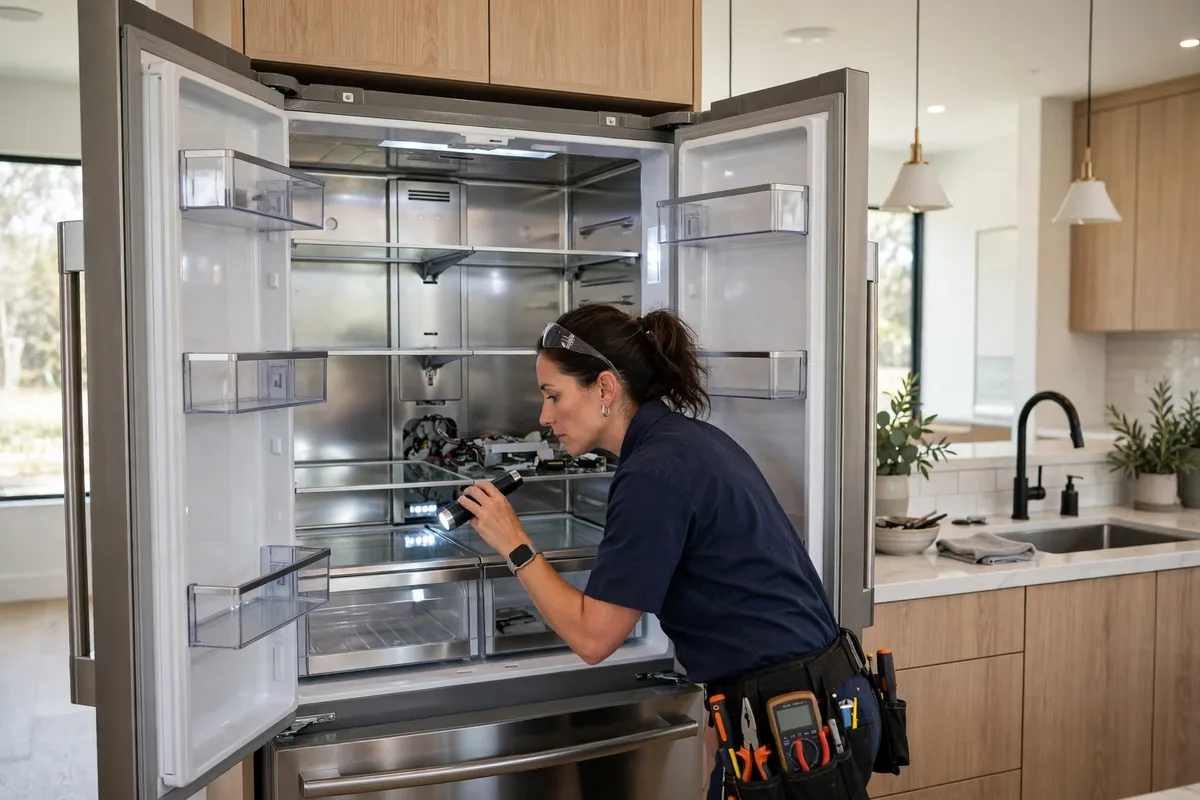
Refrigerator Repair Services in California
Need refrigerator repair in California? Get help with cooling problems, water leaks, noisy compressors and ice-maker faults. Explore repair
Learn more →An ice maker that produces no ice, makes small or hollow cubes, or leaks water can be a small fault with a simple cause, or a sign of a water-supply problem. Ice makers depend on a steady water supply, a working inlet valve, and the right freezer temperature. This page explains the common symptoms and how a repair professional approaches diagnosis.
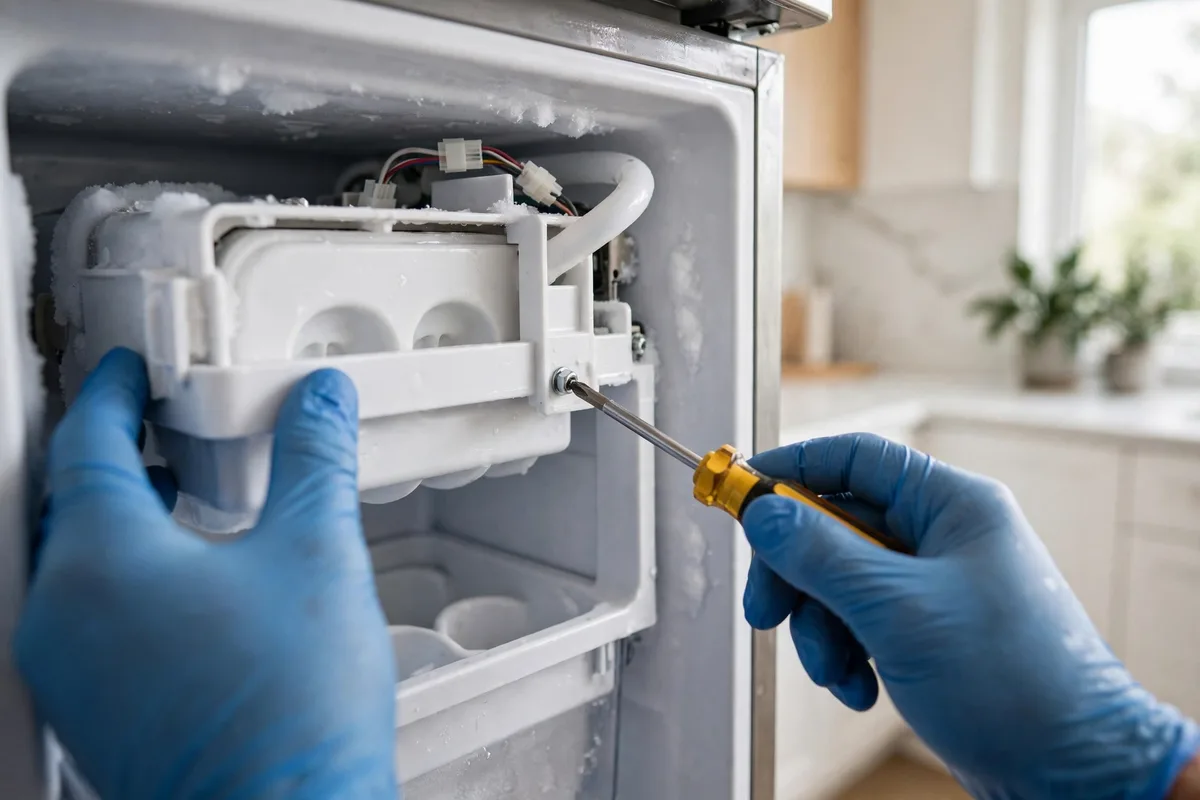
Repair help covers ice makers built into refrigerators and standalone built-in ice makers fitted under a counter. Refrigerator ice makers sit in the freezer compartment and drop ice into a storage bin, while standalone models make and store ice in a single unit and often include a drain. Both types use a water inlet valve, a fill tube, and a mold or evaporator plate to form cubes. The diagnostic approach is similar, though standalone models also need attention to their drain and ventilation.
An ice maker that makes no ice may have a frozen fill tube, a faulty water inlet valve, a clogged water filter, low water pressure, or a failed ice-maker assembly. Checking that the ice maker is switched on, that the water supply valve is open, and that the freezer is cold enough is a useful first step. If the fill tube is frozen, the cause may be low water pressure or a valve that lets water drip slowly into the tube. A repair professional can test the valve and check the water supply.
Small or hollow cubes usually mean the ice mold is not filling fully. Low water pressure, a clogged filter, a partially blocked fill tube, or a valve that does not open fully can all reduce the water reaching the mold. Replacing a clogged filter and checking the supply pressure often helps. If cubes stay small after those checks, the inlet valve or the ice-maker assembly may need testing.
Water leaking from an ice maker can come from a cracked fill tube, a loose water connection, a faulty inlet valve, or a mold that overfills. A frozen fill tube often follows from a valve that drips slowly, letting water freeze in the tube before it reaches the mold. A repair professional checks the valve, the tube, and the connections, and confirms the freezer temperature is holding steady, since a warm freezer can also affect ice production.
The water inlet valve opens to let water into the ice maker and closes when the mold is full. A valve that sticks open can overfill the mold, while a valve that does not open leaves the mold empty. The water filter, where fitted, traps sediment that can clog the valve or the fill tube. Low household water pressure can also reduce filling. A repair professional can test the valve, check the filter, and confirm the supply pressure is adequate.
In refrigerator models, ice dispenser problems can come from the ice maker itself or from the dispenser: a jammed auger, a faulty dispenser motor, or ice clumped together in the bin. Checking that the bin is not overfilled and that cubes are not stuck together is a useful first step. Diagnosis usually starts with the water supply and filter, then moves to the valve, the fill tube, and the ice-maker assembly, testing each part in sequence.
Request assistance when the ice maker makes no ice, leaks water, or keeps producing small cubes after the filter and supply have been checked. Request help promptly if water is leaking onto the floor. Repair help covers major household brands, including Samsung, LG, Whirlpool, GE, Frigidaire, Bosch, and KitchenAid, among others, and serves San Jose, Sunnyvale, Mountain View, Sacramento, and West Sacramento, with surrounding communities in California.
Repair professionals may work on major appliance brands including Samsung, LG, Whirlpool, GE, Maytag, Frigidaire, KitchenAid, Bosch, Kenmore, and others. Brand and model support varies by location — see the full brand list.
Information and service connections are available in San Jose, Sunnyvale, Mountain View, Sacramento, and West Sacramento. Check the city page for your area to confirm ZIP-code coverage.
A frozen fill tube, a faulty water inlet valve, a clogged filter, low water pressure, or a failed ice-maker assembly can all prevent ice production. Check that the ice maker is on, the supply valve is open, and the freezer is cold enough.
Small cubes usually mean the mold is not filling fully, often because of low water pressure, a clogged filter, or a valve that does not open fully. Replacing the filter and checking the supply can help.
A cracked fill tube, a loose connection, a faulty inlet valve, or an overfilling mold can cause leaking. Turn off the water supply if leaking continues and request assistance.
If the ice maker makes no ice but the water supply is on, a frozen fill tube is a possible cause. A repair professional can confirm this and check the valve, since a dripping valve often causes the tube to freeze.
The problem may be in the dispenser rather than the ice maker: a jammed auger, a faulty dispenser motor, or ice clumped in the bin. Check that cubes are not stuck together before requesting assistance.
Yes. A clogged filter can reduce water flow to the ice maker, leading to small cubes or no ice at all. Replacing the filter on schedule helps keep water flow steady.
Need refrigerator repair in California? Get help with cooling problems, water leaks, noisy compressors and ice-maker faults. Explore repair
Learn more →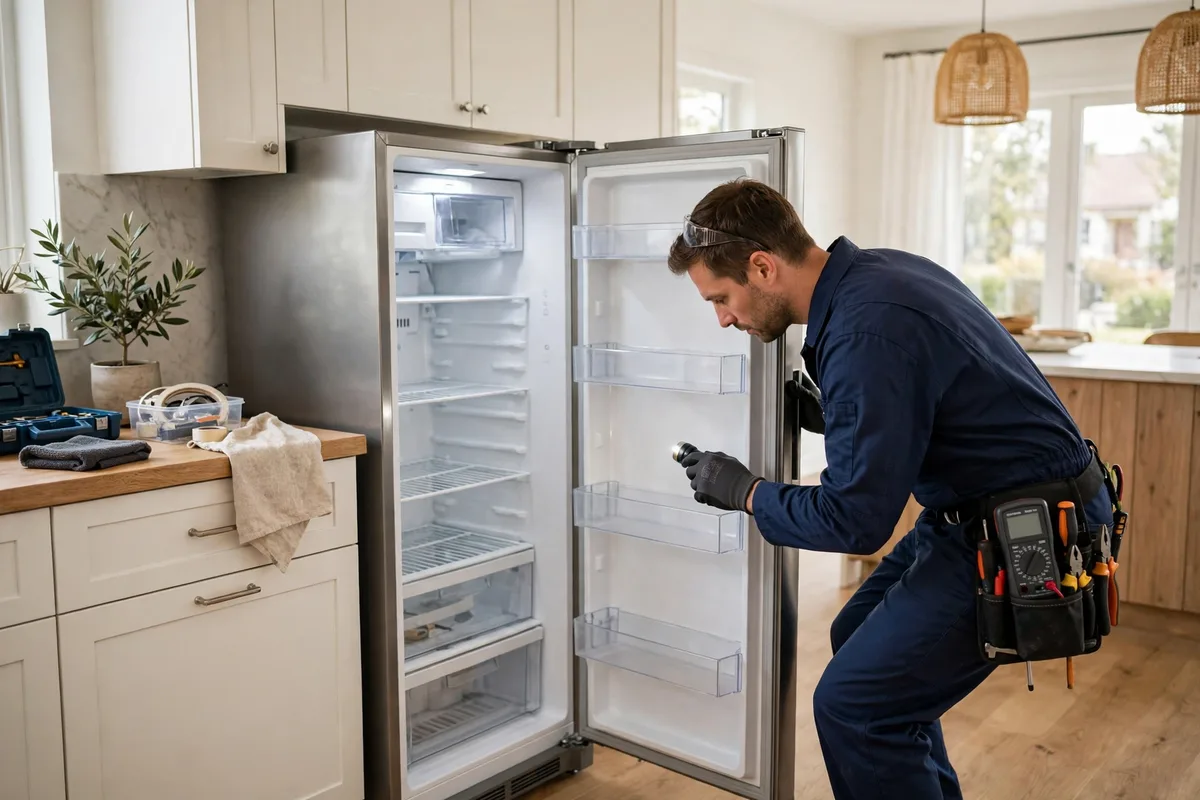
Is your freezer not freezing, leaking or building up excessive frost? Explore common freezer problems, possible causes and repair options.
Learn more →
Looking for appliance repair in San Jose, CA? Explore refrigerator, washer, dryer, dishwasher and oven repair options, local coverage and co
Learn more →
Need appliance repair in Sunnyvale, CA? Find information about refrigerator, laundry, dishwasher and cooking appliance repair, coverage and
Learn more →Find answers about appliance repair options, service coverage, brands, common appliance faults and service requests.
Learn more →Learn why an ice maker stops producing ice, which water and temperature checks help, and when to request help from a qualified repair profes
Learn more →Explore the relevant appliance service or check whether your ZIP code is included in current service coverage.