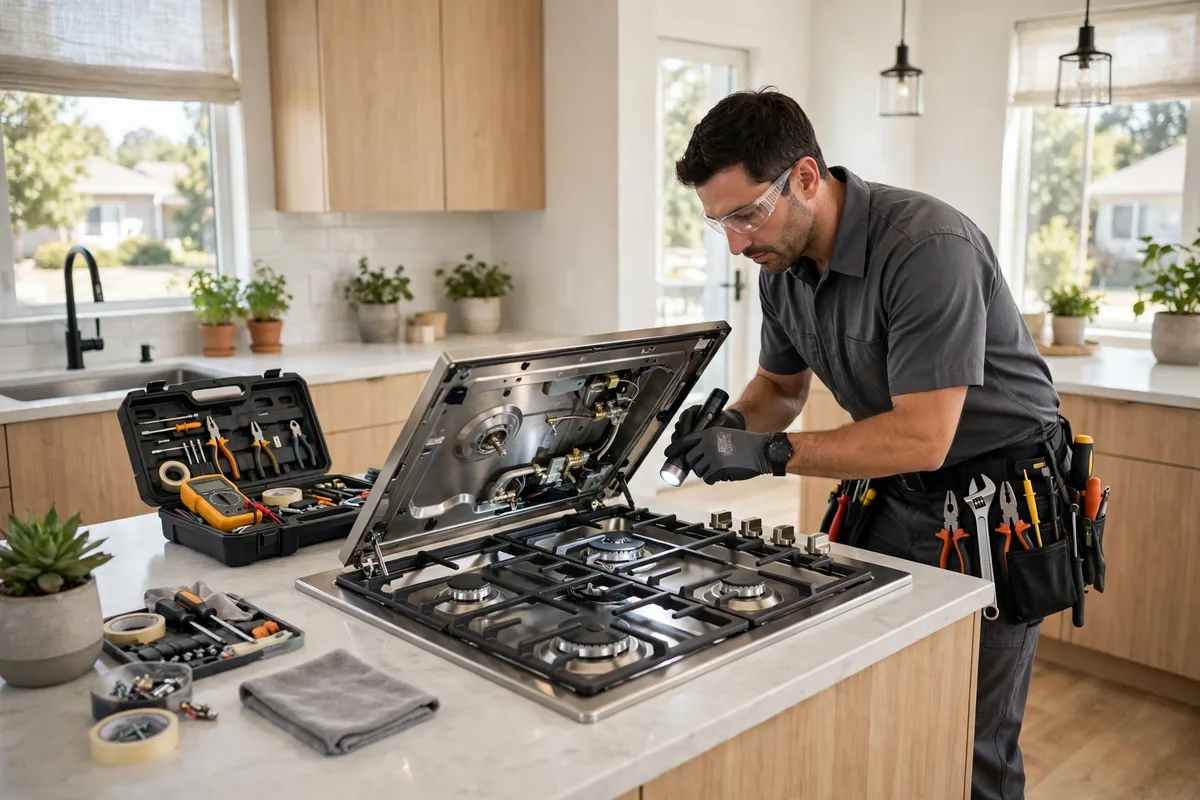
Stove and Range Repair in California
Need stove or range repair? Explore gas and electric cooking appliance problems, ignition faults, burners and temperature issues.
Learn more →An oven that does not heat, bakes unevenly, or runs hotter than the setting can turn a simple meal into guesswork. In electric ovens the fault is often a heating element or temperature sensor, while in gas ovens it is often the igniter. This page explains the main oven types, the common symptoms, and how a repair professional approaches diagnosis safely.
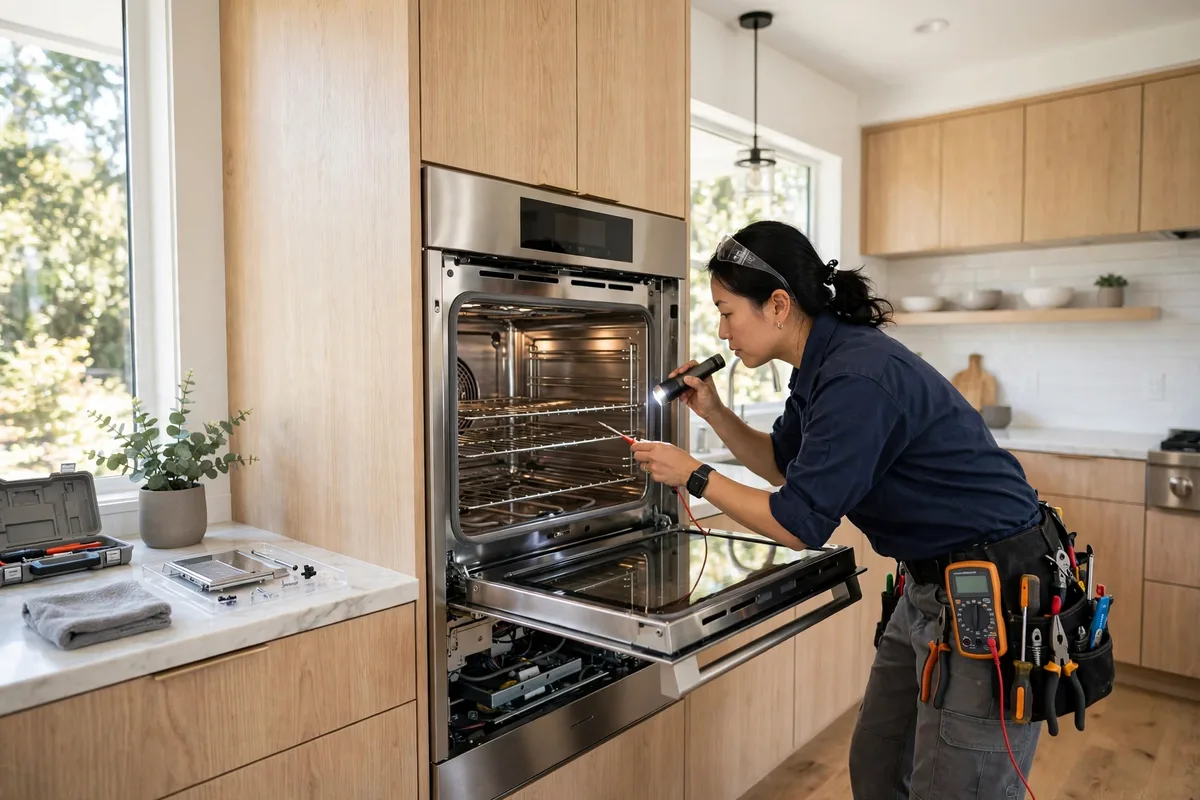
Repair help covers electric and gas ovens, including wall ovens, double ovens, built-in ovens, and freestanding ranges with an oven cavity. Electric ovens heat with bake and broil elements, gas ovens heat with a burner and igniter, and double ovens have two separate cavities with their own controls. Convection models add a fan that circulates hot air for more even baking. The diagnostic approach varies by fuel type and by whether the fault affects heating, temperature accuracy, or the controls.
An oven that does not heat at all may have a failed bake element in an electric model, or a failed igniter in a gas model. A faulty temperature sensor, a damaged control board, or a tripped thermal fuse can also prevent heating. In a gas oven, if the igniter glows but the burner does not light, the igniter may be too weak to open the gas valve. A repair professional can test the element, igniter, and sensor, and check whether the control is sending power to the heating parts.
Uneven baking can come from a partially failed heating element, a convection fan that is not running, or rack placement that blocks airflow. An oven that runs hotter or cooler than the setting may have a faulty temperature sensor, a sensor that has shifted position, or a control that needs calibration. An oven thermometer placed in the center of the cavity gives a useful comparison against the set temperature. If the difference is large or inconsistent, a repair professional can test the sensor and check the element.
An oven that will not turn on may have a tripped circuit breaker, a faulty control board, a failed door switch, or a problem with the power supply. Checking the breaker and confirming the display responds are useful first steps. A door that will not close fully may have a bent hinge, a worn door seal, or a latch that is not releasing. A door that does not seal lets heat escape, which affects baking and can make the oven work harder than it should.
The heating element produces heat in electric ovens, the igniter lights the burner in gas ovens, the temperature sensor reports the cavity temperature to the control, and the control board coordinates heating and timing. A fault in any one of these parts can produce a similar symptom, so a repair professional tests them in sequence rather than replacing parts at random. Visible damage, such as a blistered element or a cracked igniter, is a useful clue, but some faults only show up under testing.
Ovens involve high temperatures, high-voltage wiring in electric models, and gas connections in gas models. Never attempt to repair a gas valve, a gas line, or internal wiring yourself. If you smell gas, leave the area and follow local gas safety guidance before doing anything else. Unplug the oven or switch off its breaker before cleaning around the elements, and let the cavity cool fully before touching interior parts. A qualified repair professional has the tools and training to test heating parts safely.
Request assistance when the oven does not heat, heats unevenly, shows an error code, or has a door that will not close. Request help promptly if you smell gas or see sparking. Repair help covers major household brands, including Samsung, LG, Whirlpool, GE, Bosch, Frigidaire, KitchenAid, and Maytag, among others, and serves San Jose, Sunnyvale, Mountain View, Sacramento, and West Sacramento, with surrounding communities in California.
Repair professionals may work on major appliance brands including Samsung, LG, Whirlpool, GE, Maytag, Frigidaire, KitchenAid, Bosch, Kenmore, and others. Brand and model support varies by location — see the full brand list.
Information and service connections are available in San Jose, Sunnyvale, Mountain View, Sacramento, and West Sacramento. Check the city page for your area to confirm ZIP-code coverage.
In an electric oven, a failed bake element, temperature sensor, or control board is a common cause. In a gas oven, a weak or failed igniter is more likely. A repair professional can test the element, igniter, and sensor to find the fault.
A partially failed element, a convection fan that is not running, or rack placement blocking airflow can cause uneven baking. Rotating pans and checking the fan are useful first steps; if the problem persists, the element or sensor may need testing.
A faulty temperature sensor, a sensor that has shifted, or a control that needs calibration can cause inaccurate temperatures. An oven thermometer can confirm the difference before requesting a diagnostic visit.
A tripped breaker, a faulty control board, or a failed door switch can prevent the oven from starting. Check the breaker and the display first. If power is present but nothing responds, request assistance.
The igniter may be too weak to open the gas valve, even though it glows. This is a common gas-oven fault. Gas work should be left to a qualified repair professional, so request assistance rather than attempting the repair yourself.
A bent hinge, a worn door seal, or a latch problem can prevent the door from closing. A door that does not seal lets heat escape and affects baking. A repair professional can inspect the hinges and seal.
Need stove or range repair? Explore gas and electric cooking appliance problems, ignition faults, burners and temperature issues.
Learn more →
Is your microwave running but not heating? Explore common microwave faults, possible causes and repair options.
Learn more →
Looking for appliance repair in San Jose, CA? Explore refrigerator, washer, dryer, dishwasher and oven repair options, local coverage and co
Learn more →
Need appliance repair in Sacramento, CA? Explore home appliance repair services, common problems, supported brands and local ZIP-code covera
Learn more →Find answers about appliance repair options, service coverage, brands, common appliance faults and service requests.
Learn more →Discover why an oven stays cool, which settings and power checks are safe, and when to request help from a qualified repair professional.
Learn more →Explore the relevant appliance service or check whether your ZIP code is included in current service coverage.