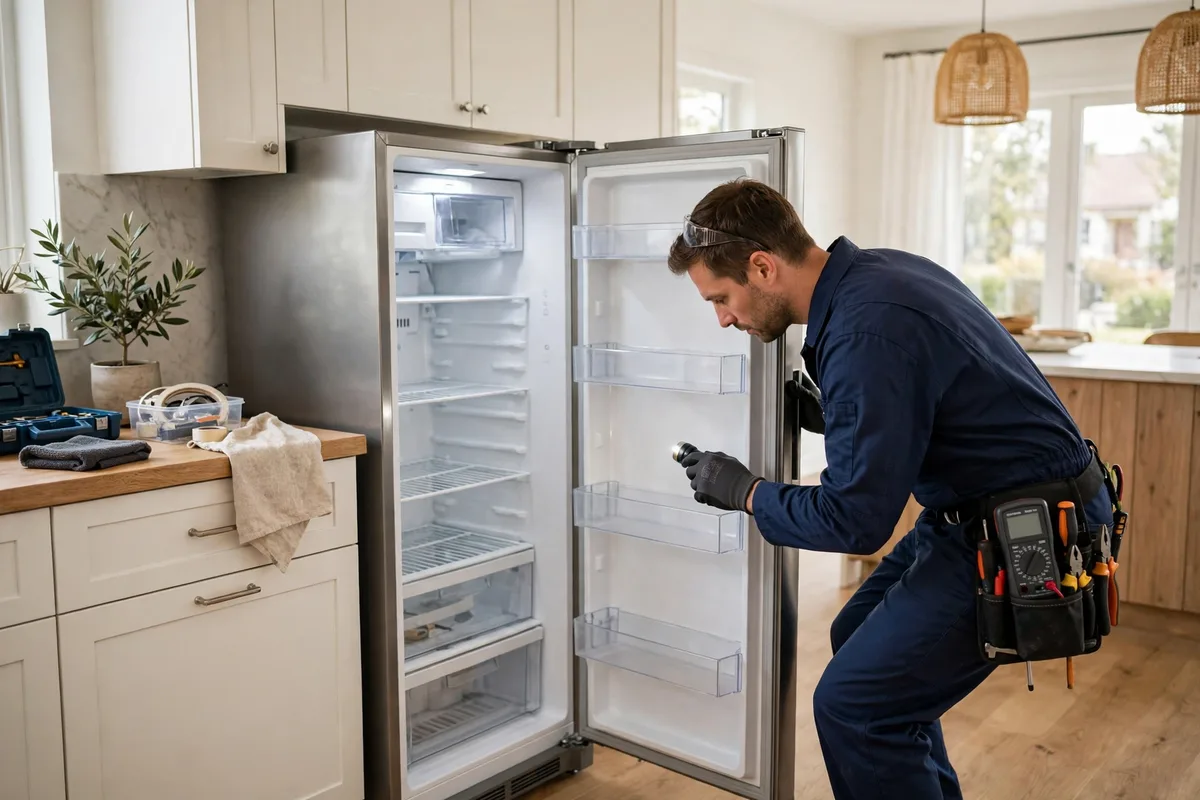
Why Is My Refrigerator Not Cooling?
A refrigerator that is not cooling may have a simple cause, such as a temperature setting that was changed, a door that is not closing fully, or blocked air vents inside the cabinet. It can also point to a problem with airflow, a fan, a dirty condenser, or a sealed cooling component. If food feels warmer than usual or items spoil sooner than expected, start with the safe checks below and move perishable food to a cooler with ice while you look into the cause.
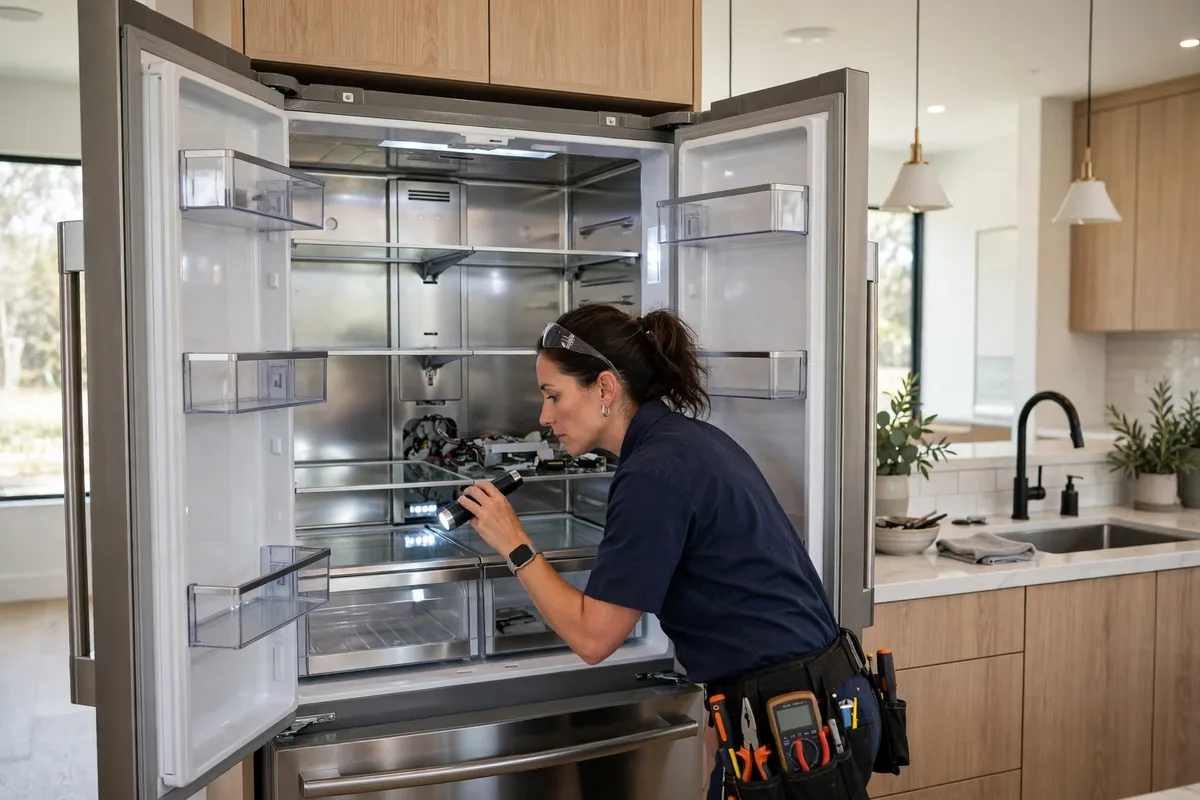
A refrigerator that stops cooling is easy to notice: milk feels lukewarm, produce wilts faster, and the inside of the cabinet feels closer to room temperature than it should. The cause is not always serious, and a few basic checks can rule out the most common explanations. This guide explains what to look for, what you can safely check yourself, and when a qualified repair professional should take over.
Common Reasons a Refrigerator Stops Cooling
A refrigerator keeps food cold by moving heat out of the cabinet and circulating cold air between the freezer and the fresh-food section. When any part of that process is interrupted, the fresh-food section is usually the first place the change shows up. A door seal that no longer closes tightly can let warm air in, while food packed tightly against the vents can block cold air from reaching the shelves.
Other common causes include a condenser that is covered in dust, a fan that is not moving air, or a temperature control that was bumped during loading or cleaning. In some cases the freezer still feels cold while the refrigerator section warms up, which often points to an airflow problem between the two sections rather than a complete loss of cooling.
- Temperature setting changed by accident during cleaning or loading
- Door seal worn, torn, or blocked by a container or drawer
- Air vents blocked by tall items, boxes, or overpacking
- Condenser coils covered in dust or pet hair
- Fan not circulating cold air from the freezer section
Safe Checks You Can Try First
Start with the temperature controls. Most refrigerators work well with the fresh-food section set near 37 degrees Fahrenheit and the freezer near 0 degrees Fahrenheit, so confirm the settings have not been moved. Give the refrigerator several hours after any change before judging the result, because temperatures recover slowly after the door has been opened often or warm food has been added.
Check the door next. Close it on a thin piece of paper and pull gently; if the paper slides out with little resistance, the seal may not be gripping well. Wipe the seal with a damp cloth, remove anything that stops the door or drawers from closing, and make sure the refrigerator is level enough for the door to swing shut on its own. Inside, move items away from the vents along the back wall so cold air can circulate.
- Confirm the temperature settings and allow several hours for a change to take effect
- Clean the door seal and check that nothing blocks the door from closing
- Move food away from air vents and avoid overpacking the shelves
- Listen for the fan and compressor sounds when the door is closed, without opening any panels
What a Repair Professional May Inspect
If the simple checks do not help, a qualified repair professional may inspect the parts that move and control cold air. That can include the evaporator fan, the condenser fan, the compressor, the start components, and the temperature sensors. The professional may also look for frost patterns, check airflow between sections, and test whether the controls are sending the correct signals.
These inspections often require removing panels or testing electrical parts, so they are not homeowner tasks. A professional can also tell whether the problem is a single worn part, a control issue, or a larger cooling-system problem, and can explain the repair options before any work begins.
Food Safety While You Wait for Help
When a refrigerator is not cooling, food safety matters more than the appliance itself. Perishable foods such as milk, meat, and prepared meals should be moved to a cooler with ice or to another working refrigerator if one is available. Discard perishable food that has been held above safe storage temperature for an extended period, especially if it smells or looks unusual.
Keep the refrigerator door closed as much as possible while you wait, because each opening lets warm air in and slows recovery. Do not turn the temperature control to its coldest setting and leave it there, since that rarely fixes the underlying cause and can freeze items in the fresh-food section once airflow returns.
When to Request Professional Help
Request assistance if the refrigerator stays warm after the settings, door, and vents have been checked, if the freezer is cold but the refrigerator section is warm, or if you hear repeated clicking, buzzing, or a fan that starts and stops. A burning smell, tripped breakers, or visible damage to the power cord are reasons to unplug the unit if it is safe to do so and request help promptly.
Also request help if frost builds up heavily in the freezer, if the unit runs constantly without cooling, or if the problem returns soon after a previous repair. Describing what you observed, including when the problem started and whether the freezer still feels cold, helps the repair professional prepare for the visit.
Frequently Asked Questions
How cold should a refrigerator be?
Most refrigerators keep food well when the fresh-food section is near 37 degrees Fahrenheit and the freezer is near 0 degrees Fahrenheit. A refrigerator thermometer placed on a middle shelf gives a more useful reading than the dial setting alone, because dial positions vary between models.
Why is my freezer cold but my refrigerator is warm?
This pattern often points to an airflow problem between the two sections. Cold air made in the freezer may not be reaching the refrigerator section because a vent is blocked, a fan is not running, or frost is blocking the air path. A repair professional can inspect the fan and airflow path to find the cause.
How long should I wait after changing the temperature setting?
Allow several hours, and often a full day, before judging a temperature change. Refrigerators recover slowly, especially in warm weather or after the door has been opened often. Check with a thermometer rather than by touch alone.
Can a dirty condenser make a refrigerator stop cooling?
Yes, dust and pet hair on the condenser can reduce the unit's ability to release heat, which makes cooling less effective and can make the unit run longer. The condenser location varies by model, so follow the use and care guide for your model or ask a repair professional about cleaning it safely.
Should I unplug a refrigerator that is not cooling?
Unplugging will not fix a cooling problem on its own, and it lets food warm up faster. Keep the unit running and the door closed while you complete the safe checks, unless you notice a burning smell, sparks, or damage to the power cord, in which case unplug it if it is safe to do so and request help.