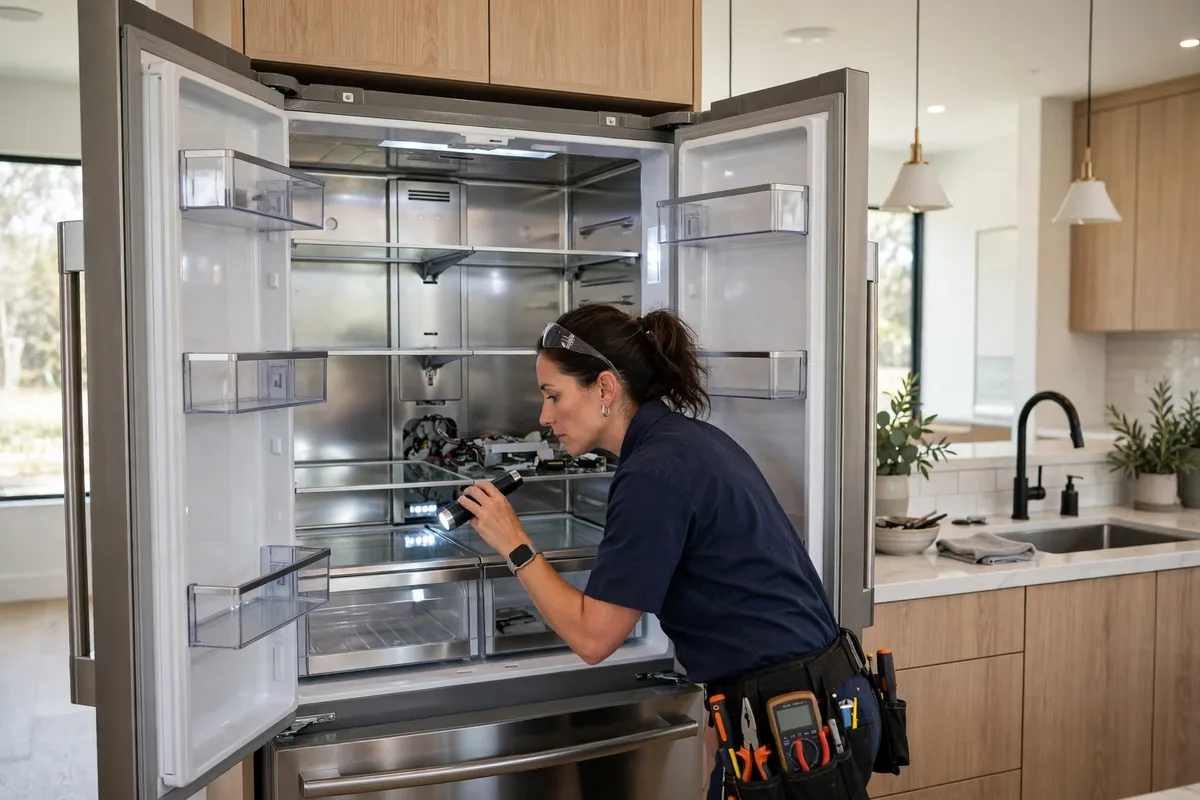
Refrigerator Repair Services in California
Need refrigerator repair in California? Get help with cooling problems, water leaks, noisy compressors and ice-maker faults. Explore repair
Learn more →A freezer that will not hold temperature, builds up thick frost, or leaks water can put a full load of frozen food at risk. Some faults are simple, such as a door left ajar or a blocked vent, while others involve the defrost system, the evaporator fan, or the sealed system. This page explains the main freezer types, the most common symptoms, and how a repair professional approaches diagnosis.
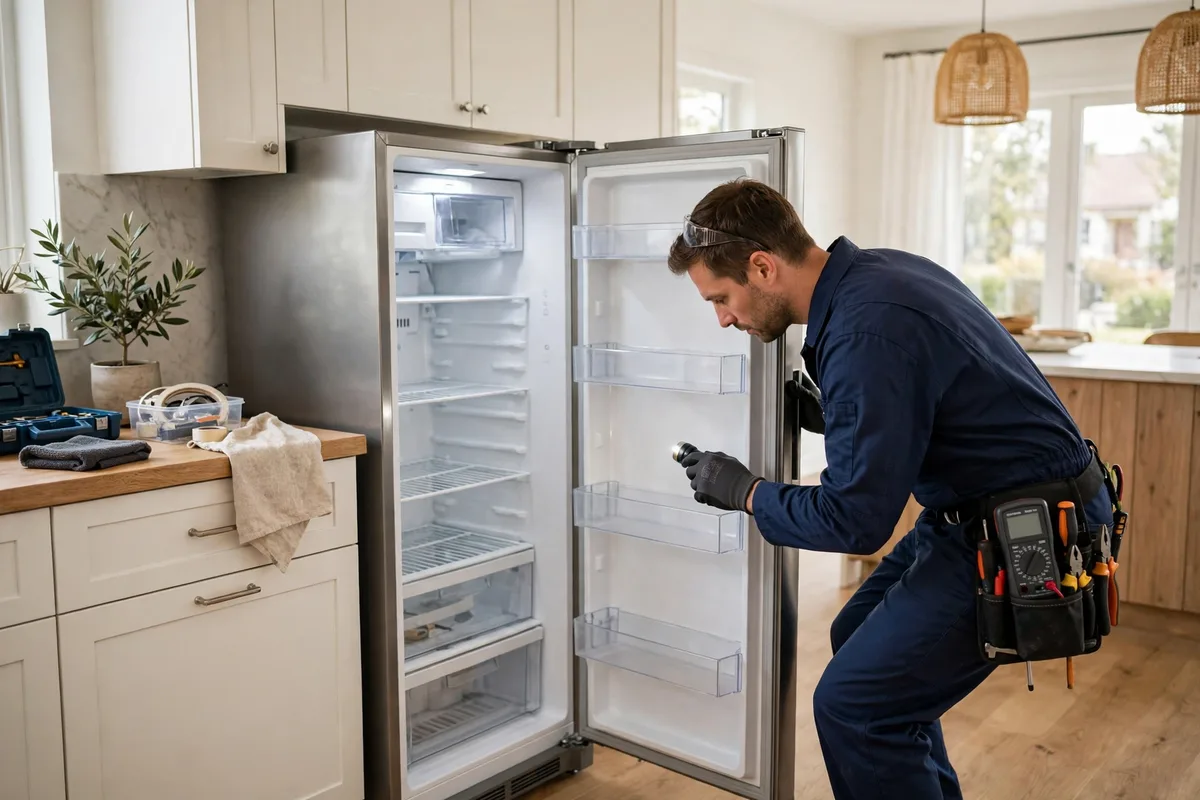
Freezer repair covers upright, chest, and built-in freezer models, including freezer compartments in refrigerator-freezer combinations. Upright freezers store food on shelves behind a single door, chest freezers open from the top and hold cold air well when opened briefly, and built-in models are fitted into cabinetry. Each type has different airflow and defrost arrangements, which affects where frost forms and how temperature problems show up.
When a freezer is not freezing, check the temperature setting, confirm the door or lid closes fully, and make sure air vents inside are not blocked by food. If the unit is running but the temperature stays above freezing, the cause may be frost blocking the evaporator coils, a failed evaporator fan, a faulty thermostat, or a sealed-system problem. A repair professional can measure the internal temperature, inspect the coils, and test the fan and compressor before recommending a repair.
A thin layer of frost is normal in some freezers, but thick frost on the walls, shelves, or evaporator cover usually means warm, humid air is entering the unit or the defrost system is not working. Common causes include a damaged door gasket, a door left open, or a failed defrost heater, thermostat, or timer. Frost buildup restricts airflow and makes the freezer work harder, so it is worth addressing rather than chipping the ice away, which can damage the interior lining.
Water under a freezer often comes from a blocked defrost drain, melting frost, or a damaged drain pan. If the drain is blocked, water from the defrost cycle has nowhere to go and can pool inside or underneath the unit. A freezer that runs constantly without cycling off may have a faulty thermostat, poor door sealing, or a cooling problem that prevents it reaching its set temperature. A repair professional checks the drain, the gasket, and the temperature controls as part of the diagnosis.
Temperature swings can follow from frequent door opening, a failing thermostat, a sensor fault, or a fan that only runs intermittently. The door gasket plays a large part in keeping temperatures steady: a gasket that is cracked, loose, or flattened lets warm air in and cold air out. Inspecting the gasket for tears and checking that the door sits square in its frame are useful early steps. If food is partly thawing and refreezing, the temperature should be checked with a thermometer rather than relying on the display alone.
The evaporator fan moves cold air through the freezer, while the defrost system periodically melts frost from the evaporator coils. If the fan stops, cold air stays near the coils and temperatures rise unevenly. If the defrost heater, thermostat, or control fails, frost builds up until airflow is blocked. A repair professional can test the fan motor, check the defrost heater for continuity, and inspect the control that starts the defrost cycle.
Diagnosis usually starts with the temperature setting and door seal, then moves to the evaporator, fan, defrost components, and compressor. A repair professional listens for normal compressor and fan sounds, checks for frost patterns on the coils, and tests components in sequence rather than replacing parts at random. Request assistance promptly if the freezer is not freezing at all, if food is thawing, or if there is a burning smell or water leaking onto the floor. Repair help covers major household brands and serves San Jose, Sunnyvale, Mountain View, Sacramento, and West Sacramento, with surrounding communities in California.
Repair professionals may work on major appliance brands including Samsung, LG, Whirlpool, GE, Maytag, Frigidaire, KitchenAid, Bosch, Kenmore, and others. Brand and model support varies by location — see the full brand list.
Information and service connections are available in San Jose, Sunnyvale, Mountain View, Sacramento, and West Sacramento. Check the city page for your area to confirm ZIP-code coverage.
In a combination unit, the freezer usually cools first and shares air with the fresh-food section. A failed evaporator fan, frost blocking the coils, or a damper problem can leave one section cold and the other warm. A repair professional can inspect the fan and evaporator to find the cause.
Warm, humid air entering through a damaged gasket or a door left open is a common cause. A faulty defrost heater, thermostat, or timer can also let frost build up on the coils. Checking the gasket and door closure is a good first step.
A blocked defrost drain is the most common cause, along with a cracked drain pan or melting frost from a door-seal problem. Clearing the drain and checking the gasket often resolves it; if leaking continues, request assistance.
A freezer may run constantly if it cannot reach its set temperature, often because of a faulty thermostat, a poor door seal, or a cooling fault. It can also happen after a large load of warm food is added. If it never cycles off, a repair professional can test the controls and cooling system.
It is better not to use sharp tools, which can puncture the lining or refrigerant lines. Unplug the unit and let frost melt naturally, or request assistance if the frost returns quickly after defrosting.
Most freezers are designed to hold around 0 degrees Fahrenheit. A freezer thermometer gives a more reliable reading than the display alone, especially when food seems soft or partly thawed.
Need refrigerator repair in California? Get help with cooling problems, water leaks, noisy compressors and ice-maker faults. Explore repair
Learn more →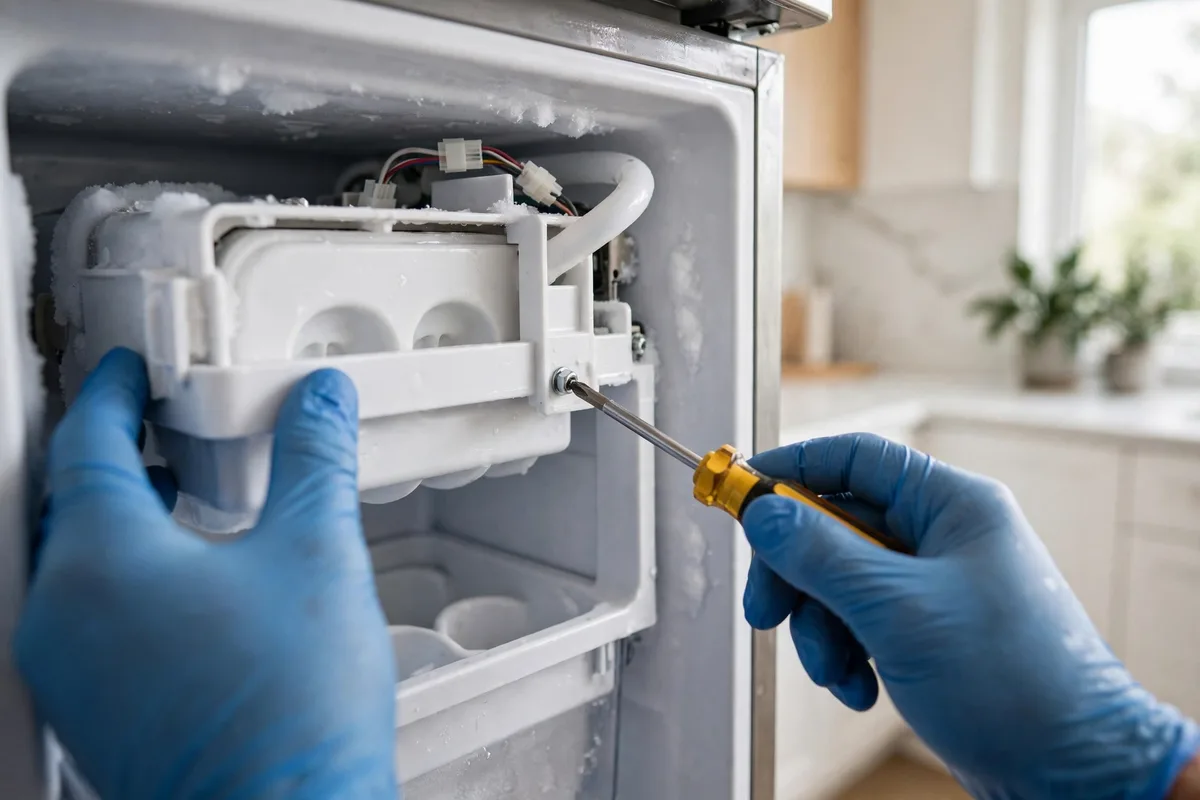
Is your ice maker not producing ice or leaking water? Explore common ice-maker problems and available repair help.
Learn more →
Looking for appliance repair in San Jose, CA? Explore refrigerator, washer, dryer, dishwasher and oven repair options, local coverage and co
Learn more →
Need appliance repair in Sunnyvale, CA? Find information about refrigerator, laundry, dishwasher and cooking appliance repair, coverage and
Learn more →Find answers about appliance repair options, service coverage, brands, common appliance faults and service requests.
Learn more →Discover why a freezer warms up, which checks are safe at home, and when to request help from a qualified repair professional.
Learn more →Explore the relevant appliance service or check whether your ZIP code is included in current service coverage.