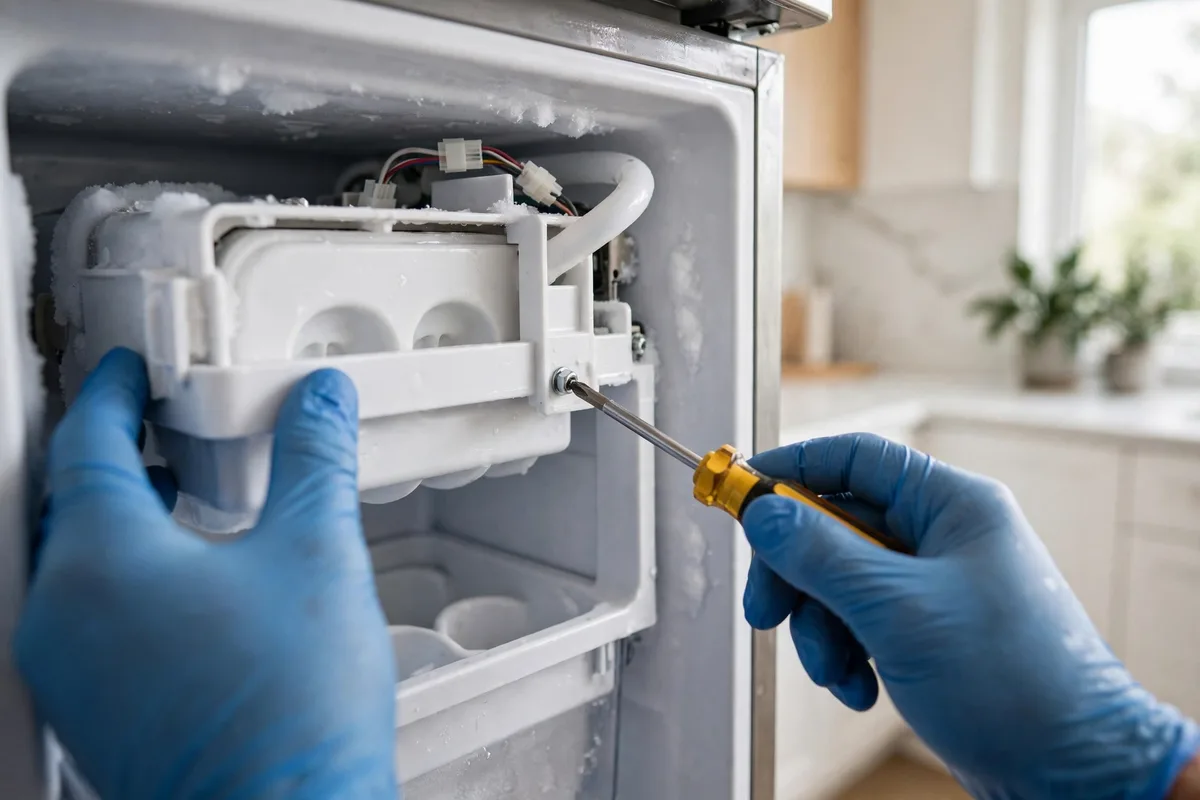
Why Is My Refrigerator Leaking Water?
A refrigerator leak is often caused by a blocked defrost drain, a water line or connection that has loosened, or a drain pan that has shifted or cracked. Water inside the cabinet usually points to a drain or defrost issue, while water on the floor often points to a supply line, a connection, or the drain pan underneath. Finding where the water starts is the first step, and any leak near electrical parts or a damaged water line should be left to a qualified repair professional.
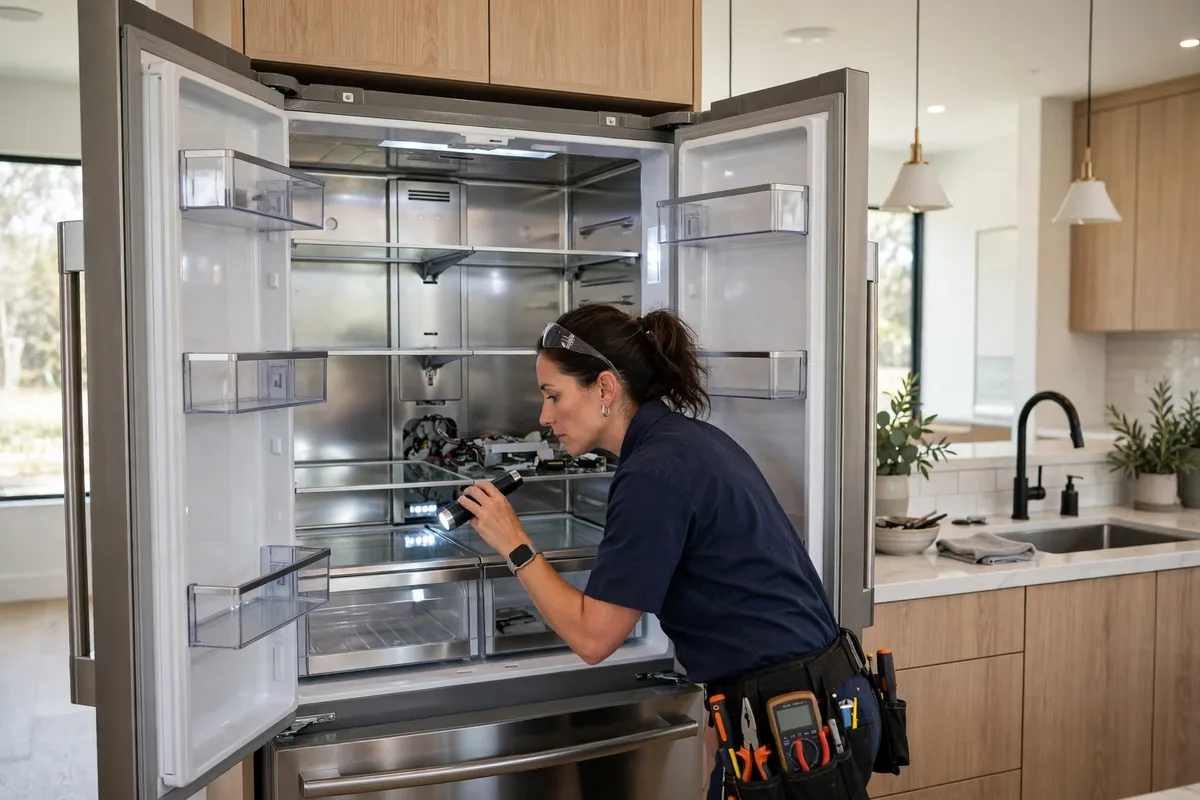
Water on the kitchen floor or pooling inside a refrigerator is a problem worth tracing quickly, because it can damage flooring and cabinets and can make the floor slippery. Some leaks have a simple source, such as a blocked drain hole or a water filter that was not seated correctly. Others involve a supply line or an internal part that needs professional attention. This guide explains how to locate the source and what to do next.
Where Refrigerator Leaks Usually Start
Water inside the fresh-food section often comes from the defrost drain. During a normal defrost cycle, frost melts and the water should run through a drain hole into a pan underneath the unit, where it evaporates. If that drain is blocked by food debris or ice, water has nowhere to go and can pool under the crispers or leak out onto the floor.
Water on the floor can also come from the water supply line that feeds an ice maker or water dispenser, from a connection at the back of the unit, or from the drain pan itself. A pan that has shifted, cracked, or overflowed can spill water even when everything else is working. Noting whether the water is inside the cabinet, under the front, or behind the unit narrows the search considerably.
How to Find the Source Safely
Dry the area first, then watch where water appears again. Check inside the cabinet for pooling under the drawers, check the floor at the front and sides, and, if you can move the unit safely without straining the water line, look behind it for drips. Place towels around the area to protect the floor while you observe.
If the unit has a water dispenser or ice maker, check whether the leak appears after dispensing water or after the ice maker cycles. A leak that appears only then points toward the supply line or a connection. Do not pull hard on the water line, and do not remove panels to reach internal parts. If the line looks damaged, turn off the water supply to the refrigerator if you know how, and request help.
- Note whether water is inside the cabinet, at the front, or behind the unit
- Dry the floor and watch where water reappears
- Check whether leaks follow dispenser or ice maker use
- Look for a loose or damaged water line without pulling on it
Common Causes Behind the Leak
A blocked defrost drain is one of the most common causes of water inside the cabinet. Small bits of food, packaging, or ice can close the drain opening, and the water from each defrost cycle then backs up. A drain tube that has shifted can cause the same result by sending water to the wrong place.
For units with a water supply, a loose fitting, a worn line, or a filter that is not seated correctly can leak slowly and steadily. Ice makers can also overflow if the fill level is not set correctly for the model. A repair professional can inspect the drain, the lines, and the ice maker fill system to identify which one is responsible.
Water Inside the Cabinet
Water pooling under the crispers or along the back wall usually points to the defrost drain. The drain hole is often at the back of the fresh-food section, and clearing it may require access that a repair professional can handle without damaging the surrounding parts.
Water on the Floor
Water on the floor is more often linked to the supply line, a connection, or the drain pan. A slow drip behind the unit can spread across the floor before it is noticed, so check the flooring and the wall behind the unit for dampness as well.
What a Repair Professional May Inspect
A qualified repair professional may inspect the defrost drain and tube, the drain pan, the water supply line and its fittings, the water filter housing, and the ice maker fill system. The professional may also check whether the unit is level, because a refrigerator that tilts forward can send defrost water toward the front instead of into the drain.
During the visit, the professional can clear a blocked drain, reseat or replace a worn connection, and test the unit through a full cycle to confirm the leak has stopped. Testing through a cycle matters, because a leak that only appears during defrost or ice making will not show up during a quick visual check.
Protecting Your Floor and When to Request Help
While you trace a leak, keep towels down, mop up standing water promptly, and avoid walking on a wet floor. Move rugs and items stored near the base of the unit so they do not absorb water. If water is near an electrical outlet or the power cord, do not touch the cord with wet hands and request help rather than moving the unit yourself.
Request assistance if the leak continues after the drain area has been checked, if the water line looks damaged, if water appears near electrical parts, or if you cannot find the source. A leak that returns after the floor has been dried usually means the source is still active, and a professional inspection can prevent further damage to flooring and cabinets.
Frequently Asked Questions
Why is there water under my refrigerator?
Water under a refrigerator can come from a blocked defrost drain, a drain pan that has shifted or cracked, or a water supply line that is leaking. Dry the floor, watch where water reappears, and check whether it appears after the ice maker or dispenser runs, which helps narrow the source.
Is a refrigerator leak dangerous?
A leak can damage flooring and cabinets and can create a slip hazard. Water near electrical parts or a power cord needs extra care, so do not touch wet electrical components. If you are unsure about the source, request help from a qualified repair professional rather than moving the unit yourself.
Can a blocked defrost drain cause a leak inside the fridge?
Yes. When the defrost drain is blocked, water from the defrost cycle cannot reach the drain pan and can pool inside the cabinet, often under the crispers. A repair professional can clear the drain and check the drain tube for the cause of the blockage.
Should I turn off the water supply if my refrigerator is leaking?
If your refrigerator has a water line and you can reach the shut-off valve safely, turning off the water supply can slow or stop a supply-line leak. Do this only if the valve is easy to reach and you are comfortable doing so, then request help to inspect the line and fittings.