Why Is My Washing Machine Not Draining?
A washing machine that will not drain often has a blocked drain pump filter, a kinked or clogged drain hose, or a drain that is not positioned correctly. It can also be caused by a load that is out of balance or a pump that is not running. Check the filter and hose placement first if your model makes them easy to reach, and request help if water remains after those checks or if the pump makes no sound at all.
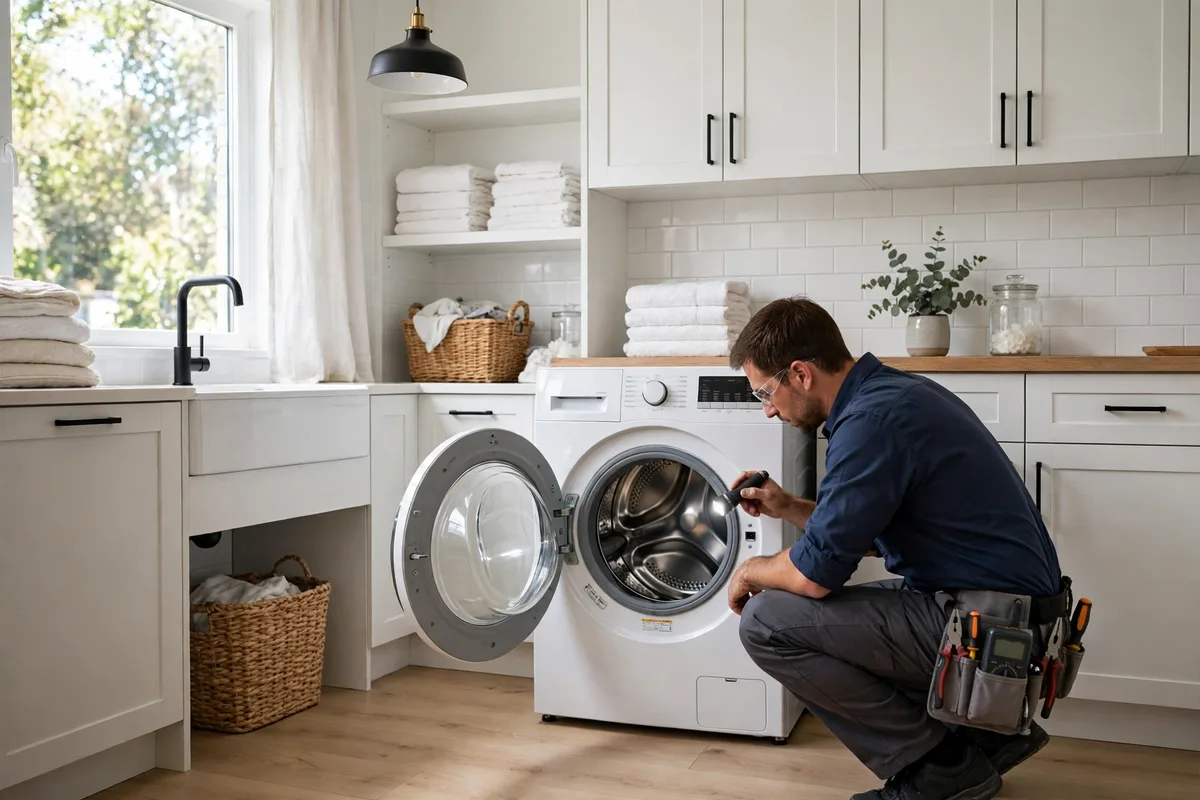
Standing water in a washer drum is a nuisance, and it usually appears at the end of a cycle when the machine should be empty. The cause is often in the drain path rather than in the wash itself, which means a few careful checks can sometimes clear it. This guide explains where to look, what to avoid, and when a professional should inspect the pump and drain system.
Common Reasons a Washer Will Not Drain
A washer drains through a pump, a filter, and a hose that leads to a standpipe or sink drain. If any part of that path is blocked, water stays in the drum. Lint, small items, and detergent residue can collect in the pump filter over time, while a hose that is kinked, crushed, or pushed too far into the standpipe can slow or stop the flow.
An out-of-balance load can also interrupt the drain and spin steps, because the machine may stop to protect itself from heavy vibration. In other cases the pump itself may be worn or blocked by an object such as a coin or a small item of clothing that slipped past the drum. The sound the machine makes, or does not make, during the drain step is a useful clue.
Safe Checks You Can Try First
Start by redistributing the load. Open the door if the water level allows it safely, spread the clothes evenly, and run a drain or spin cycle again. If the load is very heavy with towels or bedding, remove some items and try again with a smaller load.
Next, check the drain hose at the back of the machine. It should not be kinked, crushed behind the machine, or pushed so far into the standpipe that it seals against the pipe. If your model has an accessible pump filter at the front, place towels and a shallow container underneath, open it slowly, and remove lint and debris. Keep the area dry, and do not reach into the pump housing beyond the filter.
- Redistribute an uneven load and try a drain or spin cycle again
- Check the drain hose for kinks and correct placement in the standpipe
- Clean the accessible pump filter, with towels ready for spilled water
- Avoid overloading the drum with heavy items in a single load
What a Repair Professional May Inspect
If water remains after the filter and hose have been checked, a qualified repair professional may inspect the drain pump, the drain hose, the pressure switch or water level sensor, and the control that runs the drain cycle. The professional may also check for a blockage deeper in the drain path that is not reachable from the front filter.
These inspections can involve removing panels and testing electrical parts, so they are not homeowner tasks. A professional can tell whether the pump is blocked, worn, or not receiving power, and can explain the repair options before any work begins.
Handling Standing Water Safely
Standing water in a washer can spill quickly when the door is opened, especially on a front-load model. Place towels on the floor, keep a bucket or shallow container nearby, and open the door slowly. If the water is deep, bail or scoop out what you can before opening the filter or moving the machine.
Do not run repeated wash cycles in the hope that the water will clear, because that adds more water to the drum. If the machine will not drain at all and the drum is full, request help rather than tipping the machine, which can spill a large amount of water and damage flooring.
When to Request Professional Help
Request assistance if the pump makes no sound during the drain step, if the filter and hose are clear but water still remains, or if the machine stops with an error that returns after the load has been redistributed. A burning smell, a tripped breaker, or water leaking from underneath the machine are also reasons to request help promptly.
Also request help if the problem happens on most loads, if the drain hose or pump area shows damage, or if you are unsure how to reach the filter on your model. Mention whether the pump hums, clicks, or stays silent, because that detail helps the repair professional prepare for the visit.
Frequently Asked Questions
Why does my washer leave water in the drum?
Water left in the drum often means the drain path is blocked or the pump is not running. A clogged pump filter, a kinked drain hose, or an out-of-balance load can all interrupt draining. Check the filter and hose first, and request help if water remains after those checks.
Where is the drain pump filter on a washing machine?
On many front-load models the filter is behind a small access panel at the lower front of the machine. Top-load models vary, and some do not have a user-accessible filter. Check the use and care guide for your model, and place towels underneath before opening the filter, because water will spill out.
Can an unbalanced load stop a washer from draining?
Yes. A load that is bunched on one side can cause the machine to stop before or during the drain and spin steps to reduce vibration. Redistribute the clothes evenly, remove some heavy items if needed, and run a drain or spin cycle again.
Is it safe to open a washer full of water?
Open the door slowly, with towels and a container ready, because water can spill out quickly, especially from a front-load door. If the drum is very full, remove some water first or request help rather than forcing the door or tipping the machine.