Why Does My Gas Stove Keep Clicking?
A gas stove that keeps clicking usually has a burner cap that is not seated correctly, moisture or food debris around the igniter, or an igniter that is not sensing the flame. The clicking is the igniter sparking, and it should stop once the burner lights and the flame is steady. Check the burner caps and clean around the igniter only when the stove is cool and the gas is off, and request help if clicking continues or you smell gas.
Clicking from a gas stove is normal for a few seconds while a burner lights, but clicking that goes on after the flame is steady can be distracting and can point to a simple alignment or moisture problem. This guide explains what the clicking means, which checks are safe, and when a gas appliance needs professional attention.
Why a Gas Stove Clicks
A gas burner lights when the igniter creates a spark that ignites the gas flowing from the burner. The igniter clicks as it sparks, and it should stop once the flame is established and the sensor confirms the burner is lit. If the burner cap is slightly out of place, the gas may not flow evenly to the igniter, so the igniter keeps sparking in an effort to light the burner.
Moisture from a spill, cleaning, or a boil-over can also interfere with the igniter or the flame sensor. Food debris around the burner ports can block gas flow in the same way. In other cases the igniter or sensor itself may be worn, so it continues to spark even though the flame is present.
Safe Checks You Can Try First
Turn off all burners and let the stove cool completely before touching any burner parts. Remove the burner caps and grates, and check that each cap sits flat and lines up with the burner underneath. A cap that is tilted or shifted can prevent the burner from lighting cleanly, so reseat it carefully and try the burner again.
Wipe around the igniter and burner ports with a dry cloth, and remove visible food debris from the ports without forcing anything into them. If the stove was recently cleaned or a pot boiled over, allow the area to dry fully before using the burner again. Do not use a match or lighter to light a burner that will not ignite, and do not remove the igniter or any gas parts.
- Let the stove cool, then reseat each burner cap so it sits flat
- Wipe the igniter area dry and remove visible debris from burner ports
- Allow the area to dry fully after a spill or cleaning
- Try the burner once after reseating, rather than repeatedly
Gas Safety Comes First
If you smell gas, do not operate electrical switches, do not light anything, and leave the area. Contact your gas provider or the appropriate local service for guidance before doing anything else. A gas smell is different from the brief clicking of an igniter, and it should always be treated seriously.
Do not attempt to inspect, adjust, or repair gas lines, gas valves, igniters, or burner parts beyond reseating a cap and wiping a dry surface. Gas work needs a qualified repair professional with the right tools and training. Mention that the unit is a gas stove when you request help, so the visit is planned accordingly.
What a Repair Professional May Inspect
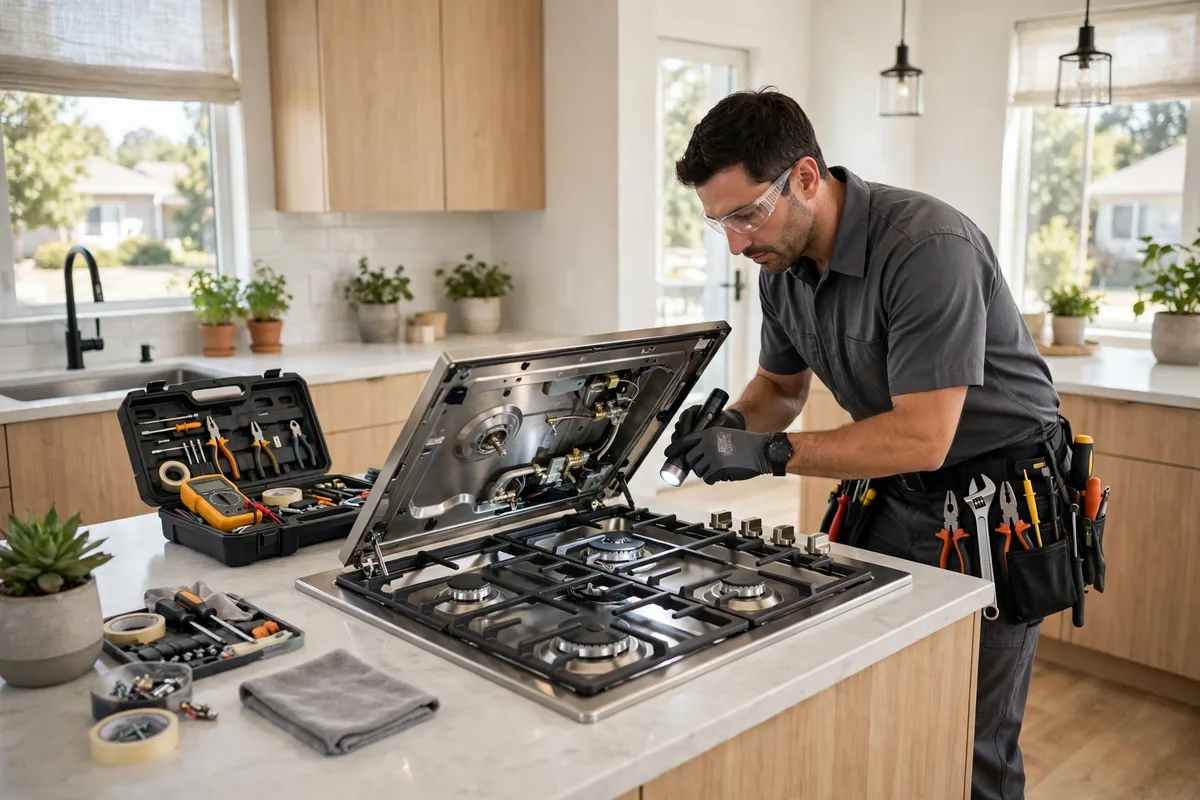
A qualified repair professional may inspect the igniter, the flame sensor, the burner caps and ports, the gas valves, and the control that runs the ignition system. The professional may also check whether moisture or debris has damaged the igniter, and whether the burner is receiving gas evenly.
These inspections involve gas and electrical parts, so they are not homeowner tasks. A professional can explain whether the cause is alignment, moisture, a worn igniter, or a sensor problem, and can describe the repair options before work begins.
When to Request Professional Help
Request assistance if clicking continues after the caps have been reseated and the area has dried, if a burner will not light at all, or if clicking happens on several burners at once. A smell of gas, a flame that looks yellow or uneven, or a burner that lights and then goes out are also reasons to stop using that burner and request help promptly.
Also request help if the igniter sparks when no burner is turned on, if the problem returns soon after cleaning, or if any burner part looks cracked or damaged. Describe which burners click, whether the flame appears, and whether the problem followed a spill, because those details help the repair professional prepare.
Frequently Asked Questions
Is it normal for a gas stove to click when lighting?
Yes, a few seconds of clicking while a burner lights is normal, because the igniter sparks to ignite the gas. Clicking should stop once the flame is steady. Clicking that continues for a long time after the flame appears usually points to a cap, moisture, or igniter issue.
Why does my gas stove click after I turn the burner off?
Clicking after a burner is turned off can be caused by moisture or debris around the igniter, or by a control that is still sensing the burner. Turn the burner off, let the area cool and dry, and request help if clicking continues or happens on several burners.
Can a spill make a gas stove keep clicking?
Yes. Water or food from a spill or boil-over can sit around the igniter and interfere with the spark or the flame sensor. Let the stove cool, wipe the area dry, reseat the burner cap, and allow it to dry fully before using the burner again.
Should I light a gas burner with a match if the igniter clicks?
No, do not use a match or lighter to light a burner that will not ignite. If the burner does not light after reseating the cap and drying the area, turn it off and request help from a qualified repair professional.