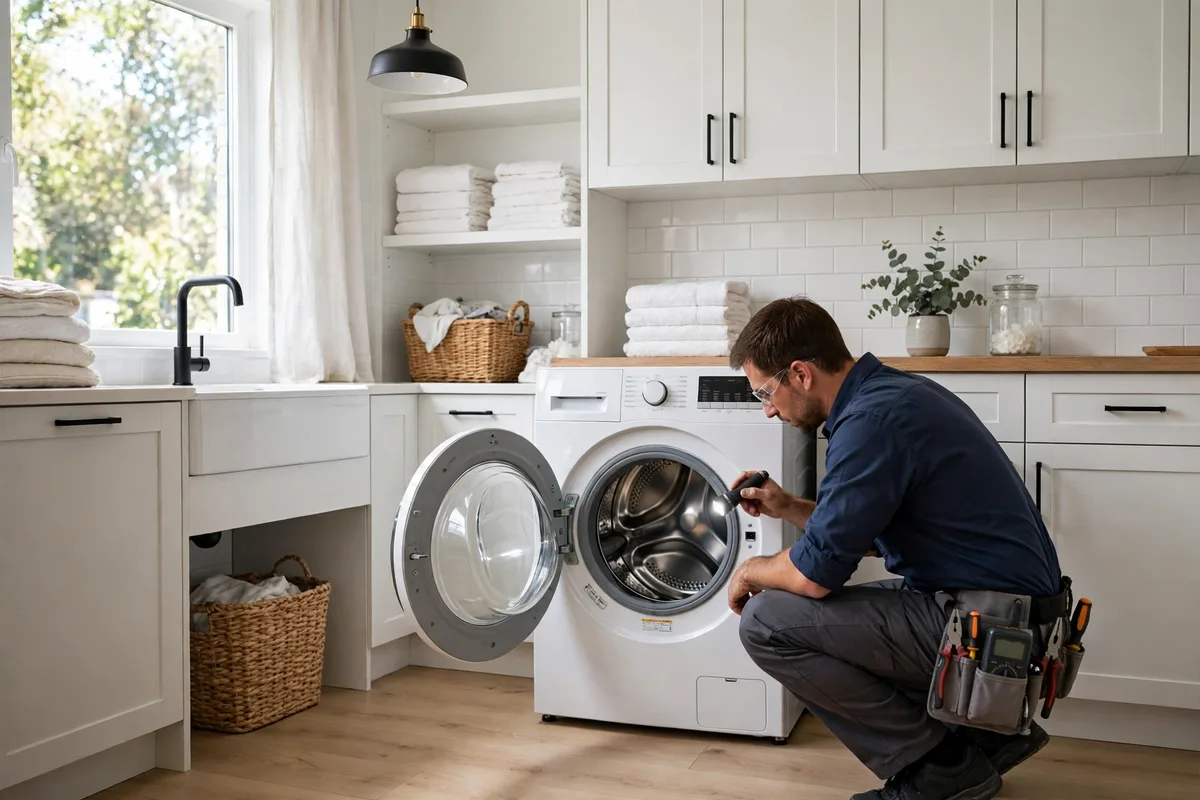
Why Does My Dryer Take So Long to Dry?
A dryer that takes too long to dry often has restricted airflow from a full lint filter or a blocked vent, a load that is too large or too wet, or a heat setting that is lower than needed. It can also be caused by a worn heating part that warms up only briefly. Clean the lint filter, check the vent path, and try a smaller load first, then request help if drying times stay long.
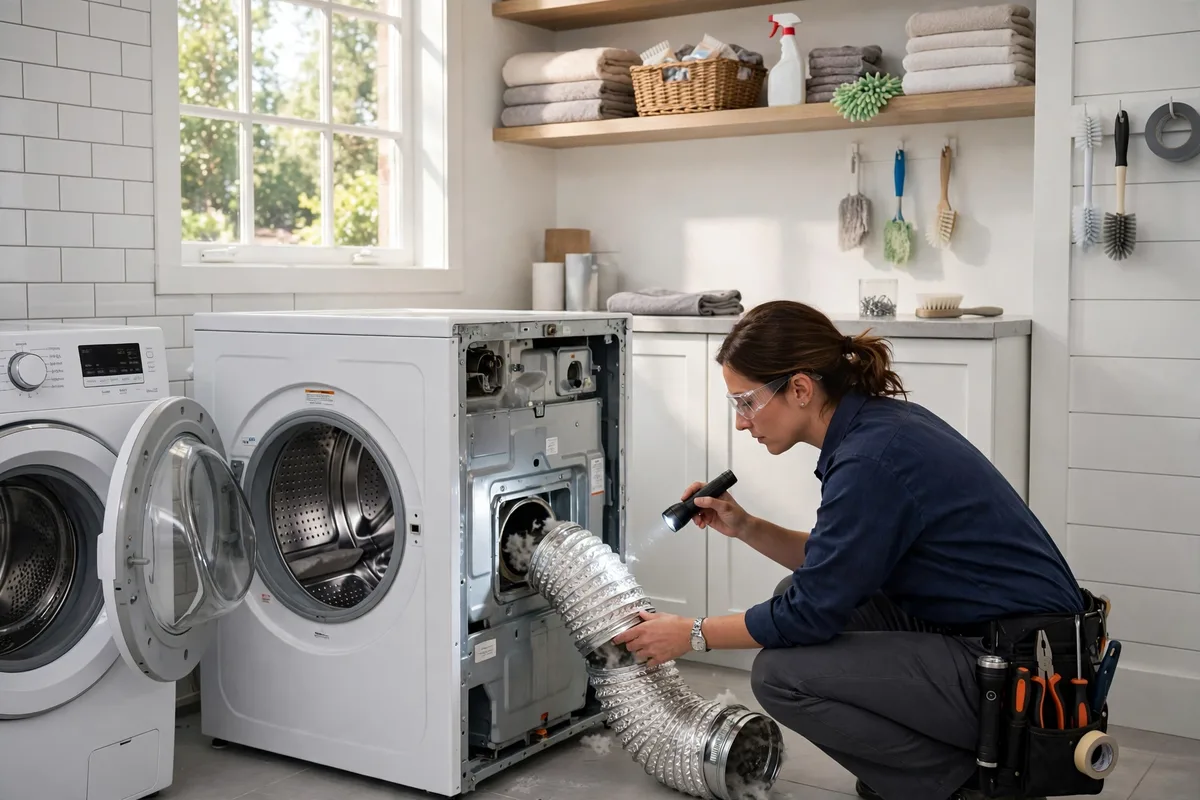
When a dryer needs two or three cycles for a load that used to dry in one, the cause is usually airflow, load size, or heat rather than a single sudden failure. Drying times can also change with the season, the fabric, and how wet the clothes are when they leave the washer. This guide explains how to narrow the cause and when a professional should inspect the dryer and vent system.
Common Reasons Drying Takes Longer
Airflow is the most common factor. A lint filter that is full, a vent hose that is crushed behind the dryer, or a vent run that is long or blocked with lint all reduce the amount of warm air moving through the drum. When airflow drops, moisture stays in the clothes and the dryer has to run longer to finish the same load.
Load and settings matter as well. A very large load, a load of heavy towels, or clothes that come out of the washer still very wet will all take longer. A low heat or delicate setting dries more slowly by design. In other cases a heating part or thermostat may be working only part of the time, so the dryer warms up, cools down, and warms up again.
Safe Checks You Can Try First
Clean the lint filter before every load, and check that the vent hose is not kinked or crushed. If you can see the outside vent, confirm that air flows freely and the flap opens while the dryer runs. A weak flow at the outside vent suggests a restriction somewhere in the vent path.
Try a smaller, mixed load on a normal heat setting and note how long it takes. Make sure the washer spin step finished, because clothes that are still very wet when they enter the dryer will take much longer. Avoid overloading the drum, and leave space for clothes to tumble freely.
- Clean the lint filter before every load
- Check the vent hose for kinks and confirm airflow at the outside vent
- Try a smaller load on a normal heat setting
- Confirm the washer spin step finished before moving clothes to the dryer
Load Size, Fabric, and Settings
Heavy fabrics such as towels, denim, and bedding hold more water and dry more slowly than light fabrics. Mixing heavy and light items in one load can leave the heavy pieces damp while the light pieces finish early. Sorting by fabric weight, when practical, gives more even drying and shorter cycles.
Cycle choice also matters. A timed dry on a low setting may end before thick items are dry, while an automatic sensor cycle should adjust to the moisture in the load. If the sensor cycle ends while clothes are still damp, note the fabric and load size, because that detail helps a repair professional judge whether the sensor or the heat system is involved.
What a Repair Professional May Inspect
A qualified repair professional may inspect the vent system for blockages, the heating part or gas ignition system, the thermostats, the moisture sensor, and the drum seals. The professional may also check whether the dryer is receiving the correct power and whether a safety control is shutting off the heat during the cycle.
Vent work beyond the accessible hose can involve long runs through walls or attics, so it is a job for a qualified professional with the right tools. A professional can measure airflow, test the heat system through a full cycle, and explain whether the cause is airflow, a worn part, or a combination of both.
When to Request Professional Help
Request assistance if drying times stay long after the lint filter, vent hose, load size, and settings have been checked, if the dryer heats only briefly, or if clothes come out hot on the outside but damp inside. A burning smell, a vent that feels very hot, or a breaker that trips during drying are reasons to stop using the dryer and request help promptly.
Also request help if the outside vent shows little or no airflow, if the vent hose is damaged, or if the problem has grown worse over several weeks. Describe the load size, the cycle used, and how many cycles the load needed, because those details help the repair professional prepare for the visit.
Frequently Asked Questions
How long should a dryer take to dry a normal load?
Drying time varies with load size, fabric, and how wet the clothes are after the wash, so there is no single number that fits every load. A normal mixed load that suddenly needs two or three cycles, when it used to need one, is a useful sign that airflow, load size, or heat may be involved.
Does a full lint filter really slow drying?
Yes. A full lint filter restricts airflow through the drum, which leaves moisture in the clothes and makes the dryer run longer. Clean the filter before every load, and check the vent hose and outside vent as well, because lint can collect in the vent path too.
Why are my towels still damp after a full cycle?
Towels hold more water than light fabrics, so a large load of towels takes longer to dry. A washer spin step that did not finish can also leave them very wet when they enter the dryer. Try a smaller load of towels on a normal heat setting, and request help if drying times stay long on smaller loads too.
Can I run the dryer with the vent disconnected to test it?
No, do not run the dryer with the vent disconnected. That sends warm, moist air and lint into the home and can create a safety hazard. Check airflow at the outside vent while the dryer runs, and ask a qualified repair professional to inspect the vent path if airflow seems weak.