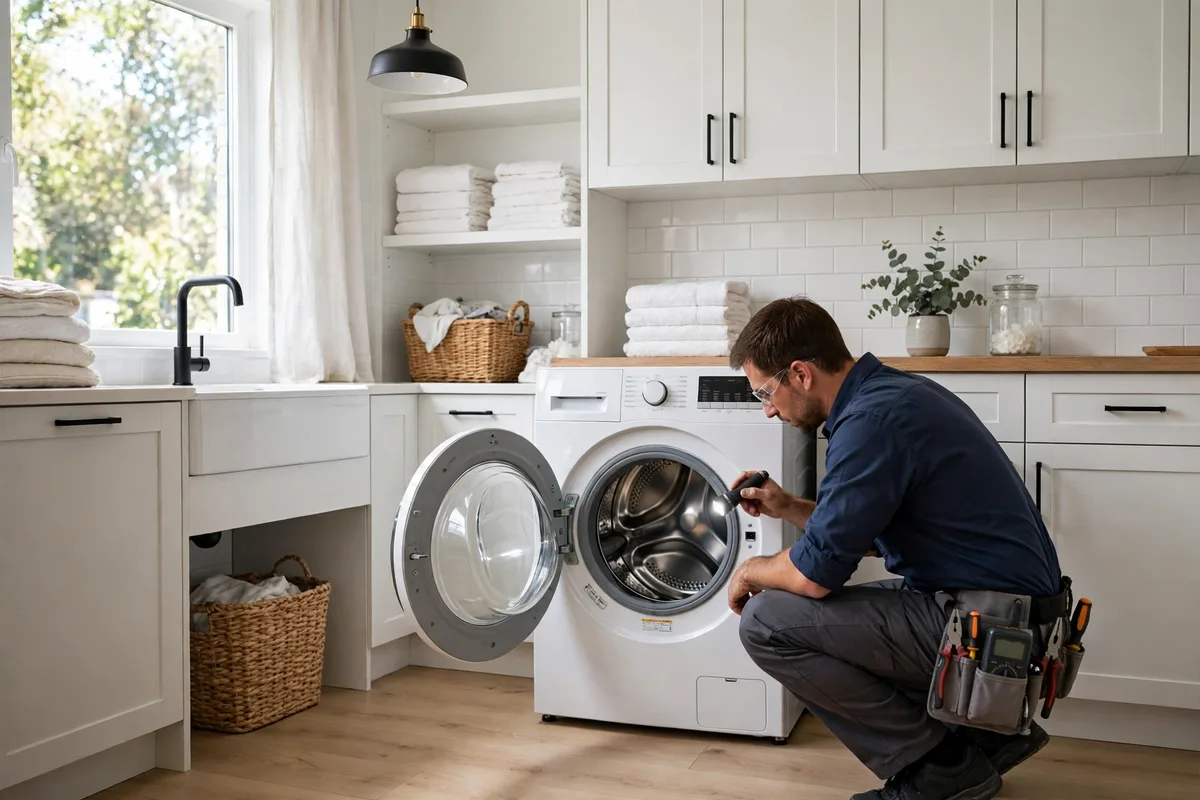
Why Is My Dryer Not Heating?
A dryer that runs without heat may have a tripped breaker, a heat setting that was changed, a blocked vent, or a lint filter that needs cleaning. It can also be caused by a worn heating part or, on a gas model, a gas supply issue. Check the power, the settings, the lint filter, and the vent path first, and leave any gas or electrical repair work to a qualified repair professional.
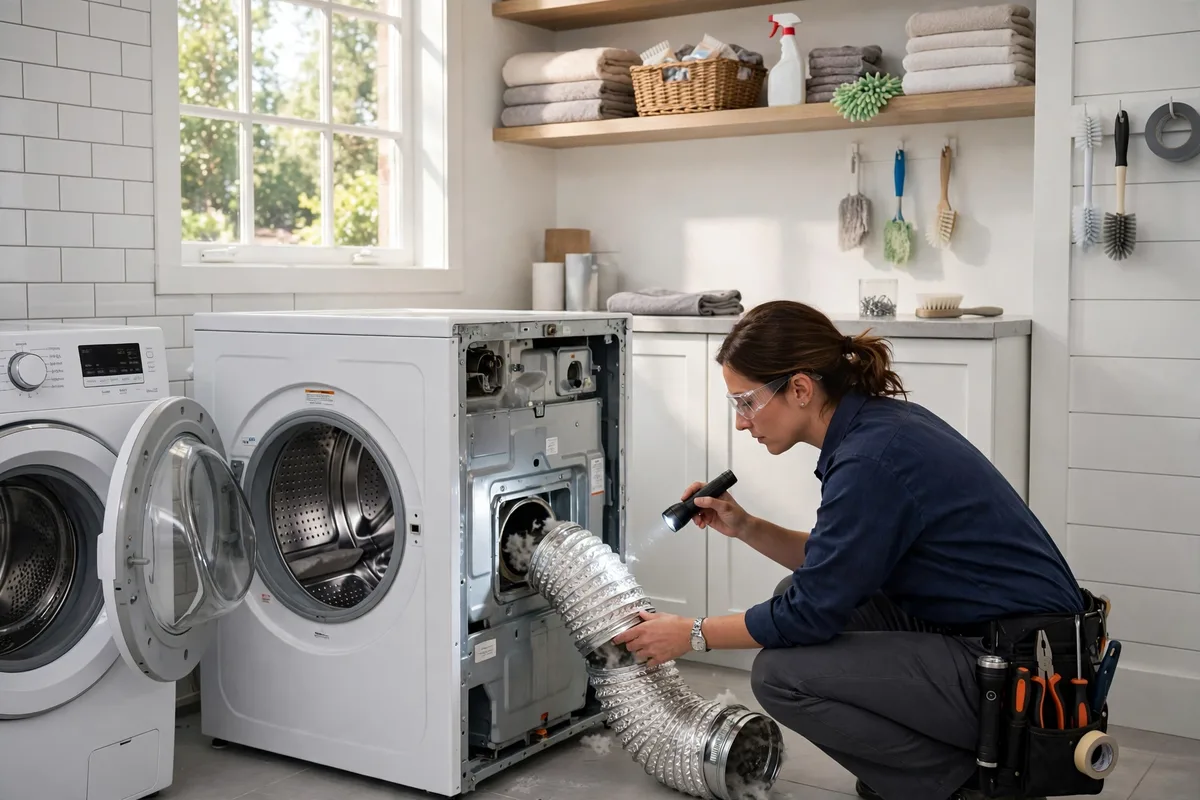
A dryer that tumbles clothes without warming them can leave a full load damp after a complete cycle. The cause is sometimes outside the dryer itself, such as power or airflow, and sometimes inside it. This guide explains the safe checks in order, the difference between gas and electric models, and when professional help is needed.
Common Reasons a Dryer Runs Without Heat
A dryer needs power, heat, and airflow to dry clothes. On an electric model, a tripped breaker can leave the drum turning while the heating part receives no power. On any model, a vent that is blocked with lint reduces airflow and can cause the dryer to shut off its heat to protect itself. A lint filter that is full has a similar effect on a smaller scale.
Other causes include a temperature or cycle setting that uses no heat, a door switch that interrupts the cycle, or a worn heating part, thermostat, or thermal fuse. On a gas model, the gas supply or the ignition parts can also be involved. The pattern matters: a dryer that never warms up points in a different direction than one that warms up briefly and then cools down.
Safe Checks You Can Try First
Check the breaker panel for a tripped breaker and reset it once if needed. For an electric dryer, confirm that the plug is seated firmly, without pulling on the cord or opening the outlet. Confirm the cycle setting, since air-fluff and delicate cycles may use little or no heat by design.
Clean the lint filter before every load, and check that the vent hose behind the dryer is not crushed or kinked. If you can see the outside vent, confirm that air flows freely when the dryer runs and that the flap opens. Do not run the dryer with the vent disconnected for a test, and do not reach into the drum area or remove panels to look for heating parts.
- Check the breaker and confirm the plug is seated firmly
- Confirm the cycle uses heat, rather than an air-only setting
- Clean the lint filter and check the vent hose for kinks
- Confirm air flows from the outside vent while the dryer runs
Gas Dryers Need Extra Care
Gas dryers use a gas supply and ignition parts to produce heat, so they need more caution than electric models. If you smell gas, do not operate electrical switches, do not light anything, and leave the area. Contact your gas provider or the appropriate local service for guidance before doing anything else.
Do not attempt to inspect, adjust, or repair gas lines, gas valves, or ignition parts yourself. A qualified repair professional can check the gas supply, the ignition system, and the safety controls without putting the household at risk. Mention that the unit is a gas model when you request help, so the visit is planned accordingly.
What a Repair Professional May Inspect
A qualified repair professional may inspect the heating element or gas ignition parts, the thermostats, the thermal fuse, the timer or control, and the vent system. The professional may also test the power supply to confirm the dryer is receiving the correct power, and may check whether a safety control shut off the heat because of restricted airflow.
These inspections involve electrical or gas parts and often require removing panels, so they are not homeowner tasks. A professional can explain whether the cause is a single worn part, a safety control that tripped, or a vent problem, and can describe the repair options before work begins.
When to Request Professional Help
Request assistance if the dryer still produces no heat after the breaker, settings, lint filter, and vent have been checked, if it heats briefly and then cools down, or if it stops mid-cycle. A burning smell, scorch marks, a tripped breaker that trips again, or any smell of gas are reasons to stop using the dryer and request help promptly.
Also request help if the vent is damaged, if the dryer is very old and the problem returns after a repair, or if you are unsure whether your model is gas or electric. Describe whether the drum turns, whether any heat appears at all, and what you observed at the breaker, because those details help the repair professional prepare.
Frequently Asked Questions
Why does my dryer spin but not get hot?
A dryer that spins without heat may have a tripped breaker, a cycle setting that uses no heat, a blocked vent, or a worn heating part. Check the breaker, the settings, the lint filter, and the vent first. If heat still does not appear, a repair professional should inspect the heating and safety parts.
Can a clogged vent stop a dryer from heating?
Yes. A vent blocked with lint reduces airflow, which can cause the dryer to shut off its heat or dry clothes very slowly. Clean the lint filter, check the vent hose for kinks, and confirm air flows from the outside vent. Vent cleaning beyond the accessible hose is a job for a qualified professional.
Is a gas dryer different when it will not heat?
Yes, a gas dryer relies on a gas supply and ignition parts, which need extra care. Do not inspect gas lines or ignition parts yourself. If you smell gas, leave the area and contact your gas provider or the appropriate local service. A qualified repair professional can check the gas and ignition system safely.
Should I reset a tripped dryer breaker more than once?
Reset a tripped breaker once and watch whether it trips again. If it trips again, or if you notice a burning smell or scorch marks, stop using the dryer and request help. A breaker that trips repeatedly can point to an electrical problem that needs professional attention.